

The Irish League is flourishing. With ever-rising attendances and a continually heightening standard of playing personnel, football in Northern Ireland is on a sustained path towards future growth and a superb product has been cultivated.
It could also be on the verge of a new dawn. Be it improved television deals or the recent rise of full-time football – a concept not unfamiliar to England or Scotland but a distinctly new phenomenon in this part of the world – there is constant talk about what steps will be taken to bring the game to new levels.
This article, though, is dedicated mostly to a look back in time rather than what is to come. Specifically, the first rise of football on the island of Ireland almost 150 years ago and the creation of its oldest club. A side that have stood the test of time, Cliftonville are loaded to the brim with history and heritage, titles and trophies, and bear a unique status and role in the popularisation of the sport throughout the Emerald Isle.
Their founder’s name adorns one of their stadium’s terraces as a mark of the position he held not just in their foundation, but equally in the infancy of the organised nature of football in Ireland. When you look back in history books, it is no coincidence that both his and the Reds‘ fingerprints are discovered all over.
In the modern age, Cliftonville of north Belfast are arguably the leading semi-professional football club on the entire island of Ireland.
Having brushed Linfield close in the title race in 2021/22, where they fell short of Gibson Cup glory to their capital rivals by just a solitary point, they are in the hunt once more – albeit this time with seven points to make up on east Antrim frontrunners Larne.
Under the tutelage of one of the league’s finest managers in Paddy McLaughlin, the Reds have stood their ground admirably amid a growing climate of full-time football around them. They have had to innovate at points, but it has paid dividends as they continue to go the extra mile on the pitch and outperform some with fully professional models in place.
And with attacking quality spearheaded on the goal front by Ronan Hale, who reunited with his older brother Rory at Solitude last summer and who, since arriving from the Inver Reds, has delivered 24 goals to date across a sublime debut campaign, there is still an expectation among the stands that the red-shirted institution fight at the top table season in, season out. Over the past two terms, that is a billing they are assuredly living up to.
McLaughlin has made his feelings known on the theme of full-time football, which has been pioneered over the last half-decade by Kenny Bruce’s noted investment at Larne and within the capital, and admitted that it was in the back of his mind as something he would consider switching to in due course.
“It would be brilliant, then we would be on a level playing field with the top clubs,” he recently expressed to the Belfast Telegraph.
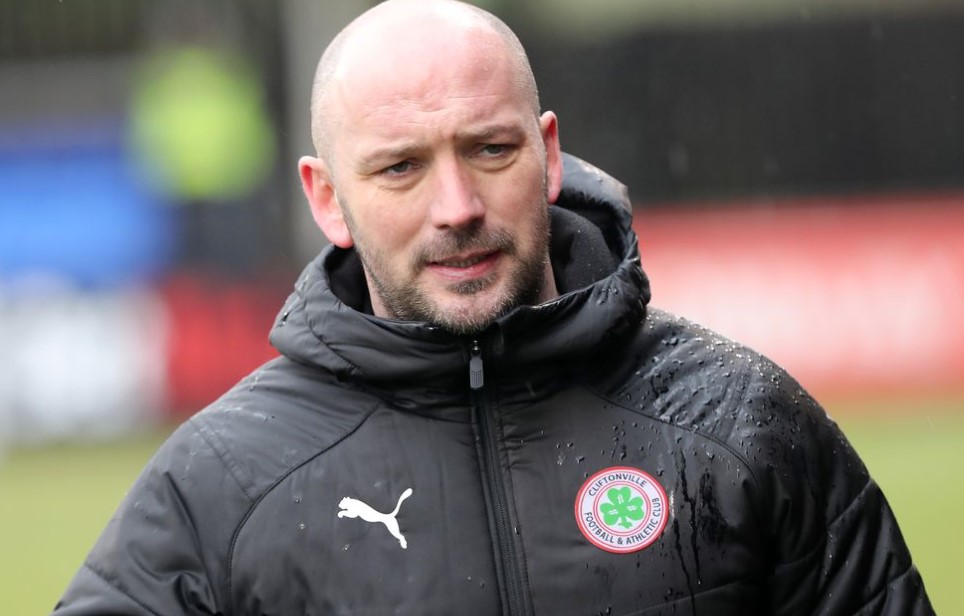
With Linfield and Glentoran now operating on fully professional strategies, and Cliftonville’s Shore Road rivals Crusaders working on a three-quarter basis, they would be the last of Belfast’s ‘big four’ to take the leap into that system.
It would also signify one of the defining moments in their illustrious history. An amateur outfit for not far off a century’s worth of their 144-year existence transitioning definitively to a point where professionalism is at the fore.
It perhaps was not John McCredy McAlery’s first thought when he placed an advertisement in the newspaper for aspiring footballers to meet up.
Then the treasurer of Cliftonville Cricket Club, McAlery listed a notice in the September 20, 1879 edition of the Belfast News Letter and Northern Whig outlets, requesting ‘gentlemen desirous of becoming members’ of ‘Cliftonville Association Football Club’ attend a training session the next day.
Now, football was still very much in its infancy on an island still more than 40 years out from partition.
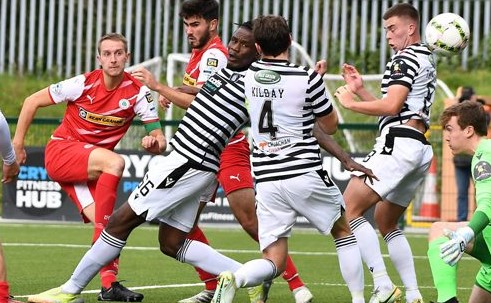
Indeed, McAlery was directly involved in the organisation of a tantalising joust between Scottish sides Caledonians and Queen’s Park the year before. The latter being Scotland’s oldest football club, and who in fact travelled to play Cliftonville in the SPFL Trust Trophy this season, such a showdown naturally whet the appetite as a clash of two teams who had been instrumental in the popularisation of the sport.
And as much as Queen’s Park had helped bring football to life in one part of the British Isles, they did likewise in another. A crowd of 1,000 people tuned in on that day in October 1878.
The Spiders, founded in 1867, were 3-1 victors on the grounds of Ulster Cricket Club in Belfast. Professionalism in 2019 has freshly enabled the Glaswegians, who currently play their home games in Stenhousemuir, to surge to a point where just four years later, a back-to-back-to-back series of promotions from the fourth-flight to the Premiership now appears a distinctly feasible outcome.
And as a result of their actions in their infancy – that autumn duel being largely recognised as the first association football match to be played on the Emerald Isle – McAlery seized upon the chance to forge a team of Ireland’s own.
In September 1879, Cliftonville Football Club was born. While in Scotland on his honeymoon, a man fell in love with the idea of the sport and made it his mission to bring it home with him.
The exact turnout following that newspaper note is unknown, but it was enough for a squad to be fielded against Quidnuncs – a rugby team – on the 29th of that month. They lost 2-1; perhaps not the worst result given this was a foreign sport to virtually everyone on the pitch.
That game is regarded as the first recognised match between two Irish teams. Of course, in the Irish League nowadays, each player knows the score as well as the next one.
It all had to start somewhere. In 1880, McAlery devised the idea of forming a binding organisation like in England and Scotland, and, together with Major Spencer Chichester, founded the Irish Football Association (IFA) that November.
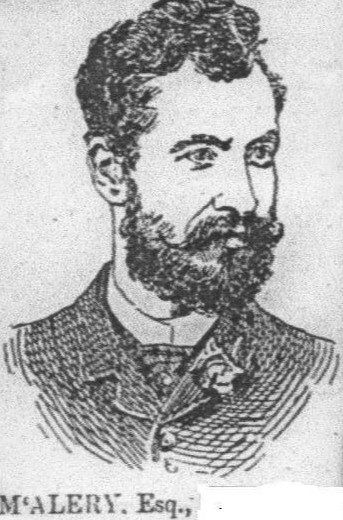
Chichester, who represented Castledawson club Moyola Park, was appointed as IFA President, while McAlery was proclaimed Secretary. In the interluding span, McAlery had helped Knock Lacrosse Club branch into football, and by the time the first-ever iteration of the Irish Cup kicked off in 1881, seven teams were integrated into the action.
Knock, Ireland’s second oldest club, did not last long – preceding Glentoran in holding the first candle for the sport in east Belfast, they became defunct in 1891, only 12 years on from their coming to be.
All the same, although the passage of time may have eroded their significance, McAlery needed them on board so football could burgeon in its earliest days.
In fact, they almost knocked out Cliftonville. It took a replay after the first try resulted in a 2-2 draw, but the Reds conquered the Bloomfield outfit in the semi-finals and progressed to the decider.
The other five accounted for in this history-making knockout tournament were fellow eastern club Avoniel, Distillery of west Belfast, northern outfit Oldpark, Moyola and Alexander from Limavady – the latter merged with Wanderers to create Limavady FC in 1884, with the highest-ranked football in the north coast town afforded by Limavady United today.
It was Moyola – modern-day representatives, alongside Limavady and the now Ballyskeagh-based Distillery, of the third-tier Premier Intermediate League – who Cliftonville would face in the showpiece. They eliminated Alexander, founded in 1880 by members of Alexander Cricket Club, three to nil in a Co Derry/Londonderry grudge affair.
And The Park did the business in the end. In a game McAlery himself played in, balancing on-pitch duties in defence (“A splendid full-back who kicks well with either foot and is a remarkably good tackler“) with a secretarial role said to have comprised making sure ‘nobody jumped (the) hedge and gained admission (to the ground) without paying entry’, William Morrow bagged a 75th-minute winner at Cliftonville Cricket Grounds to crown the Mill Meadow men inaugural Irish Cup champions.
Fast forward to the present day, and while much has evolved within the Irish League, Cliftonville’s Irish Cup woes have remained the same.
Most recently, McLaughlin’s troops were despatched at the quarter-final stage by unfancied Dungannon Swifts, losing 1-2 at Solitude to the Tyrone travellers.
Their record is, truthfully, quite astonishing – only once have they lifted the iconic trophy since the year 1909.
In the 114 years following, they have ended each without the prize for winning Ireland’s oldest football cup competition, save for 1979 when they defeated Portadown by the odd goal in five at Windsor Park.
Their latest reverse to the Swifts, who have been battling relegation all term and, ironically, are managed by the son of a former Moyola Park boss in Dean Shiels – his father, Magherafelt native Kenny, being a history-maker in his own right having guided Northern Ireland to their first Women’s Euro Finals in 2022 – is in keeping with their frustrations in trying to set the record straight.
It is made all the more bizarre when you look at their recent standing in other knockout tournaments. Twice they have held the County Antrim Shield – the ‘binlid’, as it is affectionately or not otherwise known – plus no fewer than five League Cup Final victories in the past decade alone.
Throw in a couple of titles under the late, great Tommy Breslin in 2013 and 2014, and you have a side who are not unaccustomed to claiming silverware.
Even in the earliest days of the competition, they romped to the Irish Cup in only its third edition in 1883. Expanded to 18 teams, they hammered Ulster 5-0 in the decider, and by 1909 were already seven-time winners.
Since, it has felt as if there is something in the air when it comes to a competition that, funnily enough, they helped form!
As for those successive Gibson Cup successes under Breslin, driven on the pitch by the lethal goalscoring exploits of all-time Reds icon Joe Gormley and current Hearts and Northern Ireland ace Liam Boyce, they were the fourth and fifth in Cliftonville’s history. Ardoyne favourite Gormley, considered by many to be the finest goalscorer the Irish League has seen in the modern era, is still going strong at 33 and netted late on in that ultimate last-eight loss to Dungannon to prop up to 16 for this campaign.
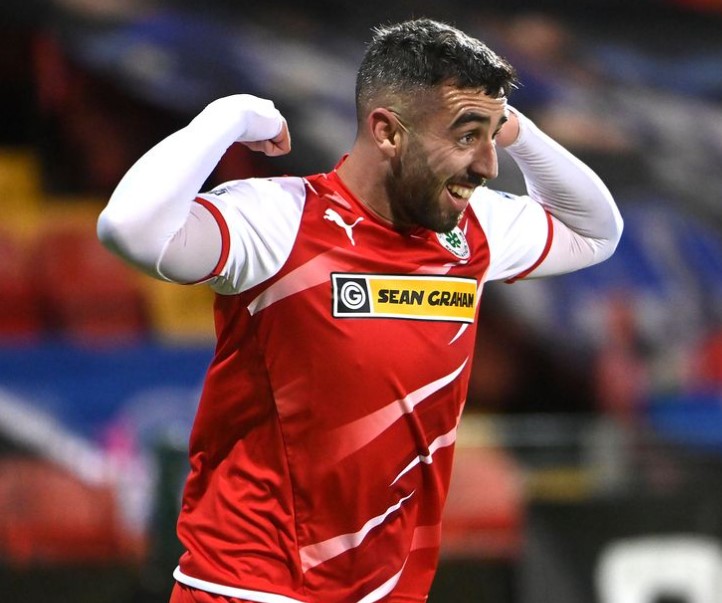
Mind you, their predicament is chalk and cheese compared to several of their first 100 years or so in the Irish League.
It was in March of 1890, a decade on from the Irish Cup’s establishment, that plans for a league came to fruition.
An entirely Belfast-based flight curiously bar Milford, based in a Co Armagh village, was the hallmark of the 1890-91 campaign. By now, two juggernauts were in on the act, and the first winners, Linfield, have since surged to a record 56 top-tier titles. The other, Glentoran, have ruled the roost in east Belfast for what has felt like forever, joining representatives of the north (Cliftonville, Oldpark), centre (Clarence), south (Ulster) and west (Distillery) of the city in the first of many league crusades to follow.
It took until 1906 for Cliftonville to first win it, sharing with Distillery. It was a league conspicuous by the absence of the likes of Moyola Park – indeed, where football was Chichester’s bread and butter, politics was the trade his grandson James Craig plied, an east Belfast-born Ulster Unionist who became the first Prime Minister of Northern Ireland in 1921 – while Dublin clubs and current League of Ireland sides Shelbourne and Bohemians eagerly participated.
They repeated the feat and held the trophy aloft in 1910, this time as sole victors over southern-city titans Belfast Celtic and Linfield.
But, thereafter, it would be another 88 years before ‘Gibson’ would be housed in Solitude’s cabinet.
By now, Cliftonville had spent two full decades in the place that would become their home for 133 years and counting. That first league campaign in 1890-91 coincided with the club taking up residence in their permanent residence.
Perhaps the most well-hidden of the four grounds that house Belfast’s current quartet of top-flight clubs, Solitude became the place to see this team in action after it had finished construction in August of that year. Conveniently located across the road from where the cricket club was, it swiftly became a premier venue for international football and set the scene for where, in 1894, the Ireland national team claimed a creditable 2-2 draw with England having previously somewhat been their whipping boys.
The trivia doesn’t end there. The first international penalty kick was awarded at this venue, while in 1891, it was here where floodlights were first used in the Irish game – but as much a marvel as it sounds, it didn’t seem all that popular.
“It seems to be incredible, but it is a fact that in 1891 two matches were played under electric lights at Cliftonville,” read a report. “Distillery defeated the Reds 4-2 and the Black Watch held Cliftonville to 2-2 draw. Kick-off in each case was at 8pm with lights suspended across the pitch.
“These were dismantled later with the announcement that spectators found it difficult to follow the action and that ‘the players seemed to have all the fun in the middle’. It had been a bold experience, but not a highly successful one with the public skeptical, almost contemptuous of this enterprising project.”
An intriguing perspective placed on something that, these days, most fans do not think twice on today.
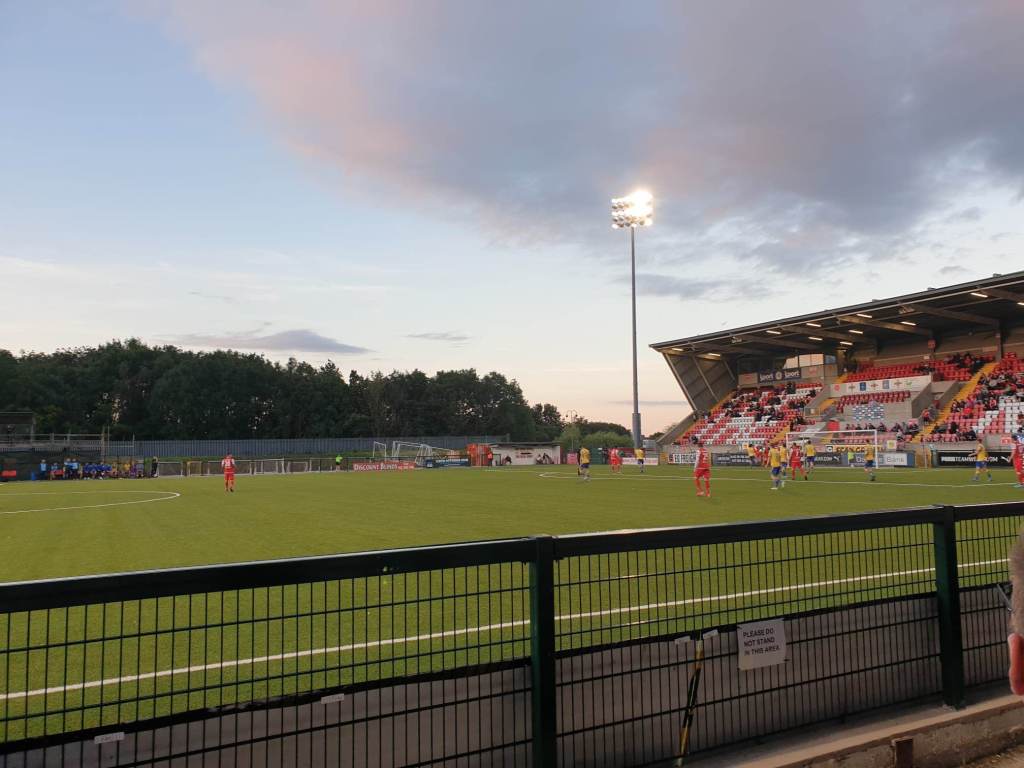
At club level, the home team had their moments. In all but one year between 1892 and 1899, they finished inside the top three positions despite the tests posed by the titans around them.
And then in the following 10 years, they twice, as said, laid claim to their plinth as champions.
But as the decades endured, it was unfortunately the league’s basement that Cliftonville became most accustomed to. There is much talk about the growth of full-time football in this age, and it would be quite the sea change for this club if that were to arrive, but at least it is not an urgent matter for McLaughlin.
In 1970, the situation was much less enviable. From 1957 to 1968, in no fewer than ELEVEN seasons in succession, the team that ended bottom was a red-shirted set from north Belfast.
The strictness with which Cliftonville abided by their amateur status started to come at the major expense of any sort of sporting success. McAlery passed away in December 1925, living out the entire Great War and up until the age of 75 with his Reds running like clockwork; by 1970, they were on a rockier road, constantly applying for re-election (relegation was still a quarter-century off), and had just ended rooted to the spot once more with one win in 22 matches.
By the end of the decade, though, having ditched those prior amateur principles in favour of more semi-professional mannerisms, the side were what seemed unthinkable towards the end of the previous decade – Irish Cup champions.
Regardless of how popular or not the move was among the more traditionalist sectors of the support base, it felt very necessary. If the club wanted to attract higher-quality players, then they would have to get their chequebook out.
Peaks and troughs have since followed, but an undeniable high point was that title in 1998. A long-standing drought was given the curtain and waters were flowing to rejuvenate the grass again, as for the first time in the three-point era, it was Cliftonville where the cup would be retained.
Under Marty Quinn, there were other perks too. In 1996, two years prior, they featured in their first – and so far only – European group stage, when they were included alongside Standard Liège of Belgium, Danish outfit Aalborg, Bundesliga titans Stuttgart and Israeli team Hapoel Haifa in Group One. Shaun Strang even scored an equaliser in Nahariya against the latter to ensure they did not end pointless, a 1-1 draw secured that June day.
Had they retained their old amateur ways, it would be hard to see any way they would have even survived second-tier football. Thus, as far as advancing with the times go, they made a good call that is still reflected in this modern age.
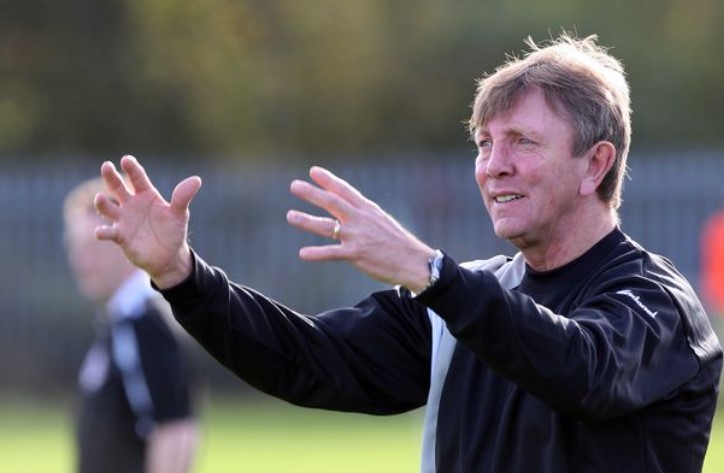
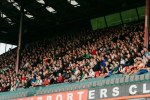
Not that the past has been forgotten. Not by any stretch. Solitude’s single-tier east stand bears the name of the club’s founder in homage, while the sign outside the home turnstile proudly reads: ‘Ireland’s oldest club, Est. 1879’.
When McAlery’s project was starting out, some key facts and figures are worth bearing in mind, both for why amateur status was favoured and how he laid such foundations that have manifested and evolved over the years.
As Benjamin Roberts dissects in his excellent book Gunshots and Goalposts on the rise of football in Northern Ireland, Belfast’s population had mushroomed from 19,000 in 1801 to 256,000 in 1891.
That was accompanied by a rise in real wages by 80% between 1850 and 1900, plus legislation – the Factory and Workshop Acts, each setting out to improve worker health and safety – which increased leisure time for much of Ireland’s working class that resonated particularly positively in Belfast’s industrial climate. When you add that to almost 2,300 miles of railway in Ireland, travel to and fro had moreover never been so advanced, hence why Dublin clubs could withstand the commitments during pre-partition.
McAlery, who ran a clothing business and benefited from links to a blossoming linen sector in the modern-day Northern Irish capital, availed of opportunities for growth posed by these factors.
Football was, of course, a sport that was already prevalent across the water. In England, the Football Association had been in force for 16 years by the time McAlery cultivated his Cliftonville panel.
In Scotland, it had been six years by 1879 since they had established their Association, while Wales had followed suit during the interlude in 1877.
It was only natural that an avenue in sport should be pursued, and that Ireland follow a new wave.
Indeed, McAlery wasn’t the only one at work. It was around this time also that the Gaelic Athletic Association (GAA) came to be, founded in Hayes Hotel in Thurles, Co Tipperary, in November of 1884 – and the GAA, which now has over half a million members, has remained amateur from the day that it started off.
Armagh native Jarlath Burns, elected as the Association’s new President mere weeks ago, has vowed to protect such a status. Not that there hasn’t been debate among some in the sport as to whether it is feasible going forward.
But in starting out, in football’s case, toeing the fine line of making it a pastime and catching up to a competitive spirit already seen in the other home nations meant it appeared to suit optimally.
Besides, no amount of professionalism could disguise that it was, in its very essence, a new sport. No less than in February 1882, when England blasted 13 beyond Ireland, as in the first ‘international’ fixture the island – or, more aptly for the side represented on the pitch, the nine counties of Ulster – contested, McAlery, who played in the game, and his team-mates were given a stark reminder that it would take a long time to build up to the point anywhere near where the likes of the English and Scotland were that year.
Cliftonville’s status as an amateur side lasted for almost 100 years, even when some clubs embraced semi-professionalism as early as the final decade of the 19th century, and it endured right up to the point where it was no longer sustainable in a competitive sense.
A point where football fans were much more acclimatised to the game, how it was played and the rules of it. And with that, it was only natural that increased talent across the division would lead to investment and increased financial willpower to take it to new heights. Nevertheless, a step like this was still a justification of the vision McAlery held.
As a semi-pro team for a half-century and counting, Cliftonville have always been there or thereabouts. And they will continue to be.
It is natural, then, to wonder what the next steps may be for McLaughlin’s men. The former Institute chief recently discussed the step of expanding training from two to three nights a week in a bid to keep pace with the full-timers.
“It’s been a big commitment from the players and it was a shock to the system at the start. It was a culture shock because they’d all grown up on Tuesday and Thursday nights, and no one likes change,” he spotlighted in that same aforementioned Belfast Telegraph interview.
“There’s no doubt that it’s tough to come off eight hours on the building site or in the office and then do a tough training session.
“But to compete, it was something we knew we had to do and if anyone didn’t buy into it, they knew they wouldn’t be at the club for much longer.
“To be fair to the players, they did buy into it and I know they love it.
“Footballers are never happier than when they’re together in the changing room or on the pitch. They are doing what they love, even if it is a big commitment.”
As another sign of the advancing times, cross-channel interest in their players has been marked. There is, for instance, a lot of valid discussion around teenage prospect Sean Moore; the 17-year-old has made a name for himself and dazzled in a campaign where he has been given sustained first-team football, resulting in English clubs reportedly casting a glance.
One doubts after being first thrashed for an unlucky 13 that English clubs would have sent their scouts to track footballers in Ireland in a hurry.
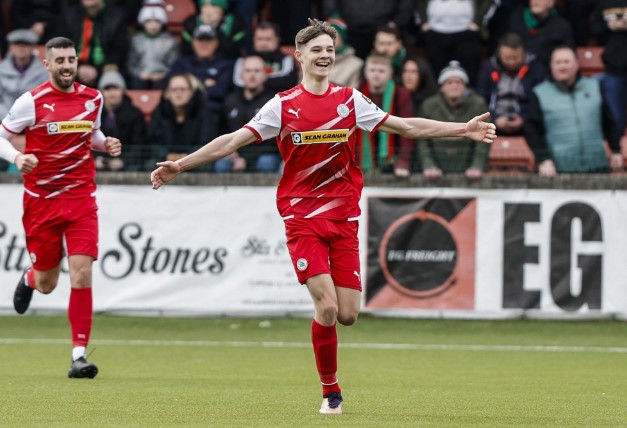
So while Cliftonville are focused on the future – they swapped out Solitude’s long-standing grass pitch for artificial turf in 2010 – and are again showing signs of adjusting to a once-more evolving landscape, the foundations that built them up to where they are now have not been cast aside.
Largely through the Reds, McAlery is fundamentally responsible for the popularisation of football on both sides of the border. But it is hard to deny that the first green shoots of the competitive club game surfaced in north Belfast.
Solitude still stands. Change has been underfoot, such as the construction of a new away terrace in the west portion known as ‘The Bowling Green’ and the replacement of the Cage End with the McAlery Stand towards the east in this current millennium, and there is more in the pipeline like the awaited necessary maintenance to reopen the upper deck of the ground’s main stand.
But for as long as it stands, it is an authentic monument to the game and a testament through the team who play there to where the game first started. McAlery’s name does not don one section without reason.
His status is set in stone, and now the game looks on course to hit new heights with establishments he first forged still leading the sport’s governance.
Cliftonville’s foundation was, in many ways, the first beat of a heart on this island that still pumps blood 144 years later.
That heart is what we have all come to know as football.
Featured image from Cliftonville FC website.
- It’s unfair to put blame at feet of Linfield and Cliftonville for Irish Cup Final crowd disorder
 A penny for the thoughts of Linfield and Cliftonville this week. This year’s Irish Cup Final was a spectacular in every sense. Nearly 15,000 packed inside Windsor Park for the biggest-attended domestic fixture in Northern Ireland this century and an occasion to savour that, for the most part, featured backing from both sides that supported… Read more: It’s unfair to put blame at feet of Linfield and Cliftonville for Irish Cup Final crowd disorder
 - Irish League chiefs must improve provisions in place to attract younger fans and families
 Let’s get a basic fact of life out of the way first – no one likes a price hike. No one likes a price hike in the same way that no one likes paying taxes, bills, debts, insurance and other such necessary expenses which, in themselves, are rising amid a general rise in the cost… Read more: Irish League chiefs must improve provisions in place to attract younger fans and families
 - How the Irish FA’s new ‘Conference Layer’ for intermediate football can be big hit or own goal
 Changes to the intermediate football sphere in Northern Ireland have long been touted and, going by the Irish FA’s latest update on the topic, closer than ever to coming to fruition. From the 2026-27 campaign, a new ‘Conference Layer’ will be in effect as part of a radical shake-up of the intermediate levels of the… Read more: How the Irish FA’s new ‘Conference Layer’ for intermediate football can be big hit or own goal
 - Steven McCullough’s crucial goal in relegation play-off seals him as a Ballymena United great
 There’s been a change in priorities for Ballymena United during recent years – albeit not necessarily the type supporters would’ve perhaps wanted. In 2019, the Braidmen were the second best team in the Irish League. Runners-up behind Linfield that year, and just seven points adrift of top spot, the peak years of David Jeffrey’s tenure… Read more: Steven McCullough’s crucial goal in relegation play-off seals him as a Ballymena United great
 - Ending Cliftonville’s Irish Cup drought proves Jim can fix it… now he must target league glory
 Finally, it’s Cliftonville’s year in the Irish Cup. An agonising waiting game ends at last and a drought that lasted 45 painful years is over in one burst of champagne rain. Since 1979, the Reds have contrived to fail in various ways in their pursuit of that elusive ninth Irish Cup – until a man… Read more: Ending Cliftonville’s Irish Cup drought proves Jim can fix it… now he must target league glory


 Football Chatters
Leave a comment