
When we discuss nostalgia in the Irish League, the women’s game is of a much more recent vintage.
Domestically, what was a six-team top league less than five years ago has boomed into a 10-strong Sports Direct Women’s Premiership that comes under the same banner as its male equivalent.
The reasoning for the growth of women’s football in Northern Ireland – and, yes, for having the odd teething issue, growth is absolutely happening – can be put down to more than just one single Euros qualification last year.
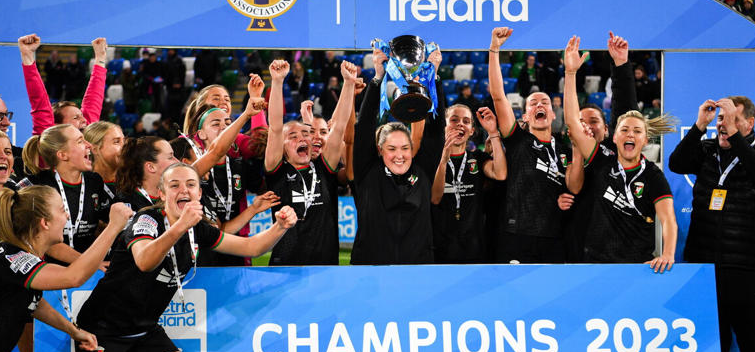
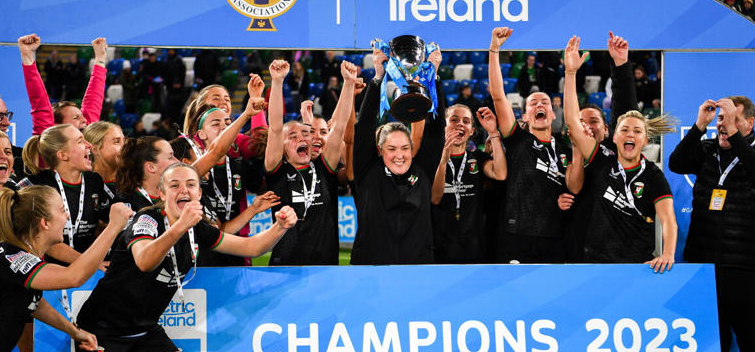
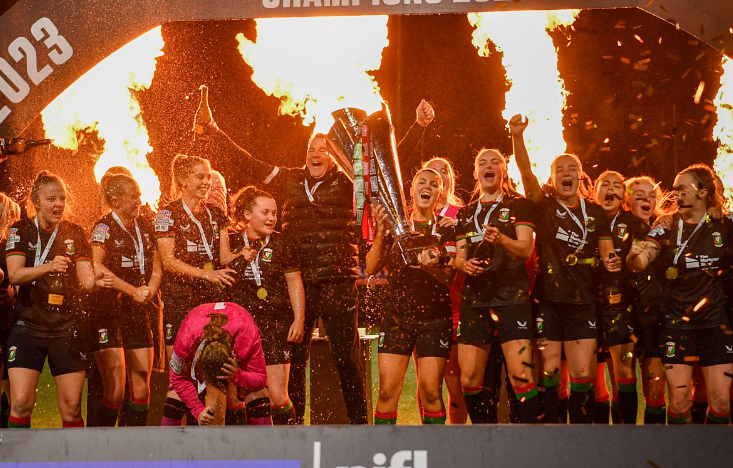
The 2023 term has just concluded. Glentoran Women wrestled back the top-tier title they ceded to Cliftonville Ladies a year earlier, following that feat up by conquering the same opponents in the curtain-closing Women’s Challenge Cup Final to claim a remarkable fifth straight success in the flagship competition in front of 1,700 people inside Windsor Park.
Driven by the forward impetus of sharp-shooter Kerry Beattie, who top-scored with a sublime 28 strikes in league play, and relying on the midfield orchestration of Joely Andrews – she herself bagged 14 – that was combined with the undisputed pedigree and trophy-laden steel of Kelly Bailie, Jessica Foy, Demi Vance and Nadene Caldwell, the east Belfast pride made sure to bring their ‘A’ game and reap the rewards of it.
Meanwhile, the Reds, who themselves scooped the League Cup and County Antrim Cup and reached the decider of the inaugural All-Island Cup this year, still enjoyed a highly creditable campaign – although it was a starring Glens side, who clinched the league unbeaten and bagged three second-half goals through Beattie, Rachel Rogan and Emma McMaster to see off their north Belfast rivals and win the Irish Cup, that shone brightest of them all.
At the other end of the standings, it was Ballymena United Women who dropped out of the division; their stay in the top-tier lasting just a single season as Mid Ulster Ladies’ automatic safety was secured by a solitary point.
A streak of three successive victories against the Sky Blues, Mid Ulster and Larne were just what Derry City Women needed to retain their place, but you could hardly wipe the smiles off the Inver Reds when their survival in their first-ever top-flight campaign was confirmed in seventh.
A Lisburn Rangers squad full to the brim with youthful exuberance will enter into the Premiership next year having achieved promotion as NIWFA Championship winners – they also reached the semi-finals of the Women’s Challenge Cup, with only a Vicky Carleton-inspired Cliftonville denying them a spot in the showpiece – and they pack a lot of promise and potential ahead of next term.
It was an eventful and enthralling year, with sustained big hitters such as Crusaders Strikers, Sion Swifts Ladies and Linfield Women continuing to challenge at the top of the table too.
But on top of that, it was an enjoyable year.
As is perhaps less the case with their male counterparts, the women’s international set-up is inextricably reliant on the growth of football closer to home.
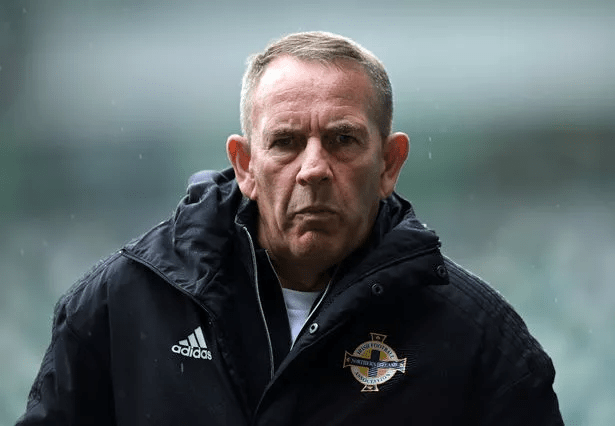
A successful Irish League is important to bolster the fortunes of Northern Ireland on a global stage – after all, of the 23-strong squad selected by Kenny Shiels to represent at the Euros in 2022, 13 of them hailed from NI clubs.
Therefore, if the league is progressing, then that is likely to be for the world to see if there is a prospering, yet still distinctly localised, Northern Ireland panel plying their trade in a major tournament.
The two seasons following that historic tournament and moment in England always felt key to evaluating how the legacy of that historic participation had been acted on.
The picture we have? Well, it’s not perfect – not that it was expected to be – but steps are surely being taken in the right direction.
Some of that is, admittedly, subject to perspective.
When Cliftonville seared to respective 15-0 and 14-0 triumphs over Ballymena and Mid Ulster last term, such chasms may have added weight to the argument of those in the glass half empty camp.
The notion would have been that for a league to have first-choice internationals at one end and amateurs at another would not have contributed to sustainable growth.
From the glass half full token, however, the thought process might have been that it is still the early knockings of a long road – it is, in fairness – and to balance it out, it would require several years’ worth of developing avenues already being taken.
And the latter adds fundamental context to the debate.
It seems obvious to say, but cultivating consistent pathways from youth level to the first-team is integral – and at as many clubs as possible.
Be it a trickle-down effect that can see a diaspora spread across the top-flight and the lower reaches or, indeed, a rise in homegrown talent that shines brightly when given the chance, it will spell enhancement down the line.
That is happening in the men’s Irish League right now, and that formula isn’t non-transferable.
There are feelgood stories, too. 2023 saw the highest-attended fixture in domestic Northern Ireland women’s football history, as 868 people filed into Solitude for the 2-2 draw between Cliftonville and Glentoran on Friday, June 2.
On the international stage, an equal pay agreement that will see both the male and female international stars of Northern Ireland receive the same amounts of money was hailed as a “transformative moment” by Irish FA Director of Women’s Football Angela Platt.
“Equality is the cornerstone of everything we do,” she stated.
“This is a transformative moment for football in this country and demonstrates that we are continuing to invest in the women’s and girls’ game.”
And how about Cliftonville flying the flag in the Women’s Champions League for the first time in their history? They took on a monstrous challenge, the might of Benfica, but still made it a moment to savour; Caitlin McGuinness becoming the north Belfast team’s first-ever scorer in the competition is history in itself.
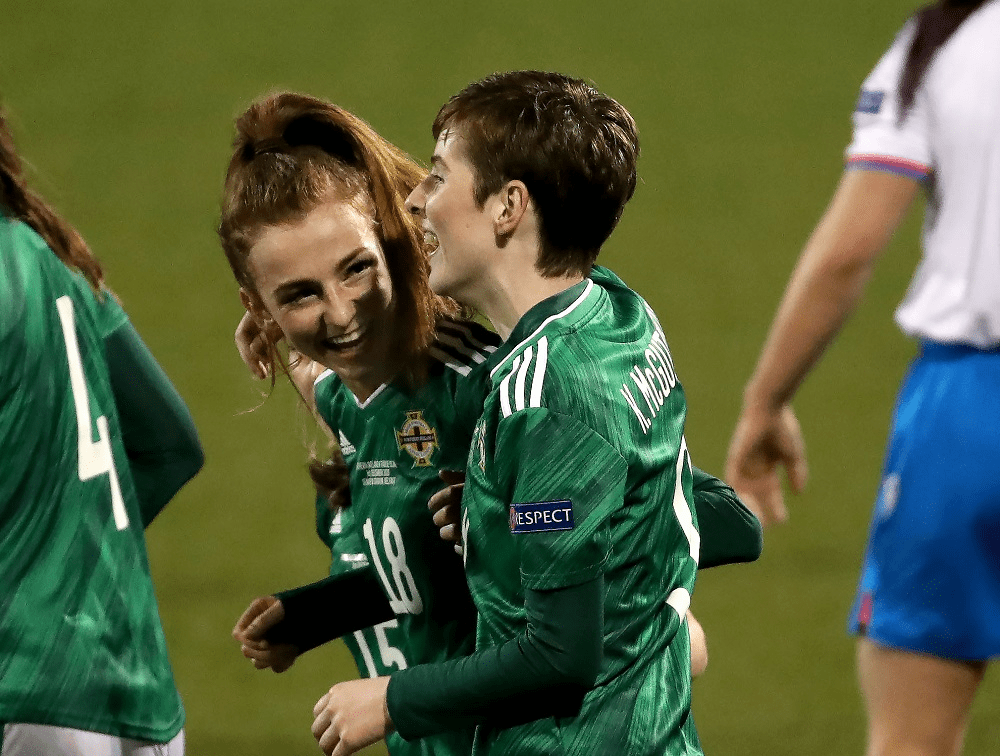
Crusaders, although still working their way back to their title-winning exploits of a decade ago, also look firmly on the right track.
As the only outfit to defeat Cliftonville in the league – and twice at that – they made their say at the top of the table even if it was not their principal concern, and despite the departure of star taliswoman Emily Wilson to Glentoran, they could count on 38-year-old legend Julie Nelson to show them up the table and as high as third-place.
Count the likes of Amy McGivern, Mairead McCann and Lisa Armour among an experienced core, as well as Beth Chalmers and Jessica Rea who have risen up through the ranks, and the Crues possess a blend of youth and experience that potentially can close the gap again.
The Seaview establishment are, as one might expect, backed by an Academy system that has been refined over years.

Linfield, who also possess young talent in the form of Leckey siblings Ebony and Sienna, Mia Fitzsimmons, Keri Halliday, Carla Devine, Abi Sweetlove and Jane McMaster, are another who built a place at the top of the women’s game on the foundation of their set-up.
To recall one Women’s Challenge Cup semi-final between the Blues and Crues at Clandeboye Park, the list of names on the team-sheet was a who’s who.
Of the Linfield starting side, seven of them travelled to the Euros with Northern Ireland – McGuinness sisters Kirsty and Caitlin, Rebecca McKenna, Chloe McCarron, Abbie Magee, Ashley Hutton and Kelsie Burrows.
Louise McDaniel, who was on the bench, also travelled, while Casey Howe has since earned a switch to Sligo where she has been a first-team regular.
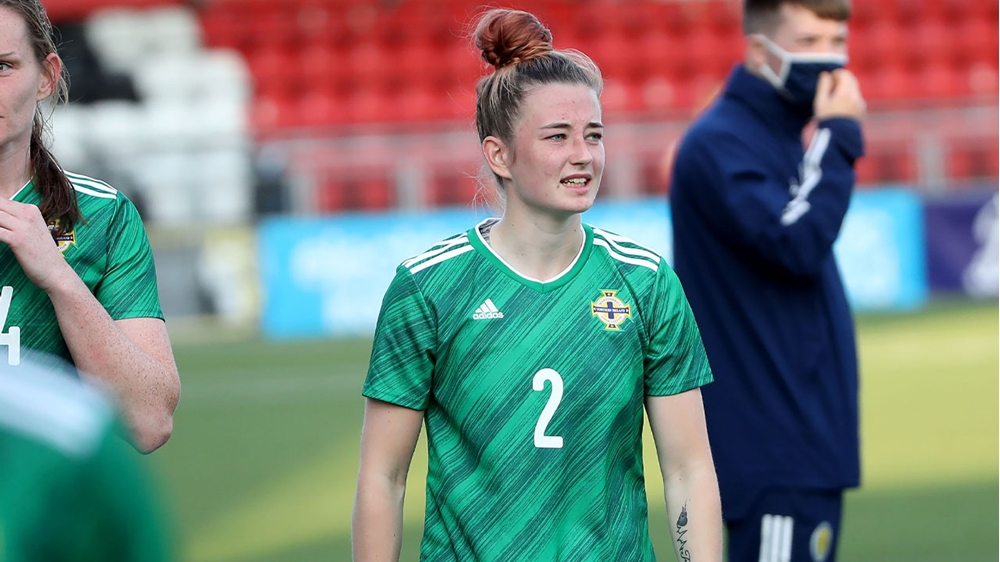
That was in August 2019. At which point seven of those nine named were still in their teenage years.
With the right coaching, guidance and attitude within Irish League set-ups, a base was build up to result in Euro qualification.
Linfield finished in fifth-position last term, 18 points from their Big Two foes Glentoran at the summit, but they, too, with their history of nurturing stars of tomorrow, have the formula to re-enter the title discussion in due course.
Fourth-placed Sion, another with the seed of youth at the heart of their philosophy that is functioning alongside the pedigree of Kelly Crompton and captain Tasmin McCarter, are as good as you can get outside of the capital – and the Tyrone team, who are regulars in cup deciders and semi-finals, continue to do themselves proud.
Bearing all that in mind, then, the future looks bright.
And significantly as well, the future is now.
Featured image from Andrew McCarroll/Pacemaker.
- It’s unfair to put blame at feet of Linfield and Cliftonville for Irish Cup Final crowd disorder
 A penny for the thoughts of Linfield and Cliftonville this week. This year’s Irish Cup Final was a spectacular in every sense. Nearly 15,000 packed inside Windsor Park for the biggest-attended domestic fixture in Northern Ireland this century and an occasion to savour that, for the most part, featured backing from both sides that supported… Read more: It’s unfair to put blame at feet of Linfield and Cliftonville for Irish Cup Final crowd disorder
 - Irish League chiefs must improve provisions in place to attract younger fans and families
 Let’s get a basic fact of life out of the way first – no one likes a price hike. No one likes a price hike in the same way that no one likes paying taxes, bills, debts, insurance and other such necessary expenses which, in themselves, are rising amid a general rise in the cost… Read more: Irish League chiefs must improve provisions in place to attract younger fans and families
 - How the Irish FA’s new ‘Conference Layer’ for intermediate football can be big hit or own goal
 Changes to the intermediate football sphere in Northern Ireland have long been touted and, going by the Irish FA’s latest update on the topic, closer than ever to coming to fruition. From the 2026-27 campaign, a new ‘Conference Layer’ will be in effect as part of a radical shake-up of the intermediate levels of the… Read more: How the Irish FA’s new ‘Conference Layer’ for intermediate football can be big hit or own goal
 - Steven McCullough’s crucial goal in relegation play-off seals him as a Ballymena United great
 There’s been a change in priorities for Ballymena United during recent years – albeit not necessarily the type supporters would’ve perhaps wanted. In 2019, the Braidmen were the second best team in the Irish League. Runners-up behind Linfield that year, and just seven points adrift of top spot, the peak years of David Jeffrey’s tenure… Read more: Steven McCullough’s crucial goal in relegation play-off seals him as a Ballymena United great
 - Ending Cliftonville’s Irish Cup drought proves Jim can fix it… now he must target league glory
 Finally, it’s Cliftonville’s year in the Irish Cup. An agonising waiting game ends at last and a drought that lasted 45 painful years is over in one burst of champagne rain. Since 1979, the Reds have contrived to fail in various ways in their pursuit of that elusive ninth Irish Cup – until a man… Read more: Ending Cliftonville’s Irish Cup drought proves Jim can fix it… now he must target league glory
 Football Chatters
Leave a comment