
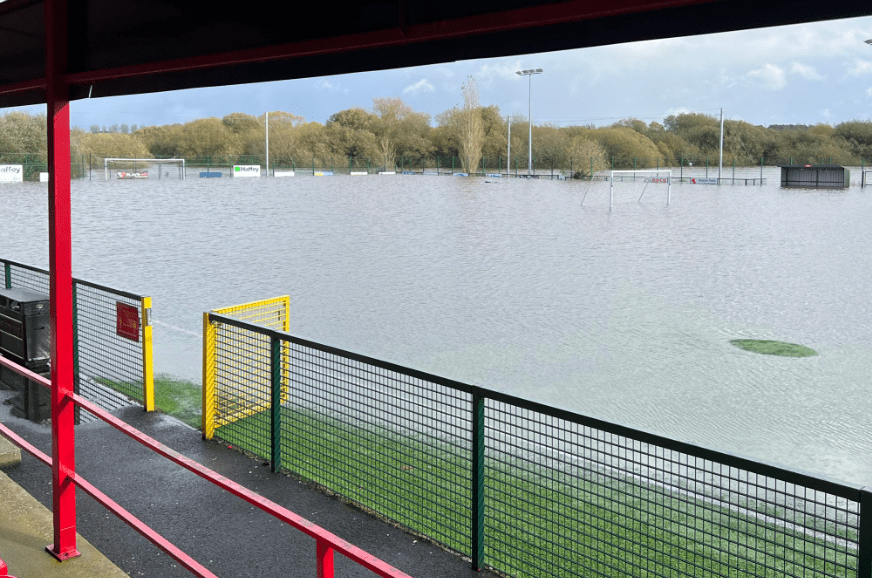
Much of last week was punctuated by torrential downpours – and, unfortunately, football pitches did not escape the firing line.
Floods caused travel disruption across Northern Ireland, blocking roads and access routes in various areas, while videos did the rounds on social media revealing just how horrendously the landscape was hit.
Some football clubs, particularly in south Down and Armagh, found their surfaces coated by sitting water, and palpable fears were that more damage had been done than just their pitches being rendered unplayable.
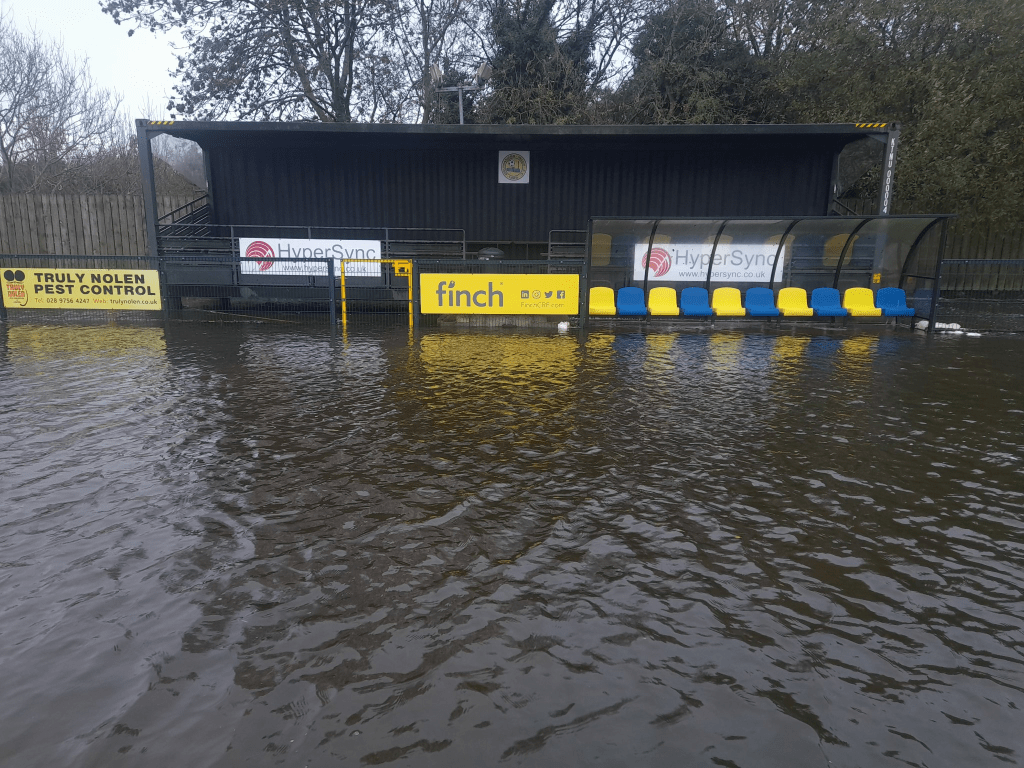
Playr-Fit Championship outfit Annagh United last week shared pictures of the state of the BMG Arena. Quick thinking meant that almost the entirety of the brunt was felt there, as opposed to interior areas such as the clubhouse or changing rooms, but it was still a hugely depressing sight.
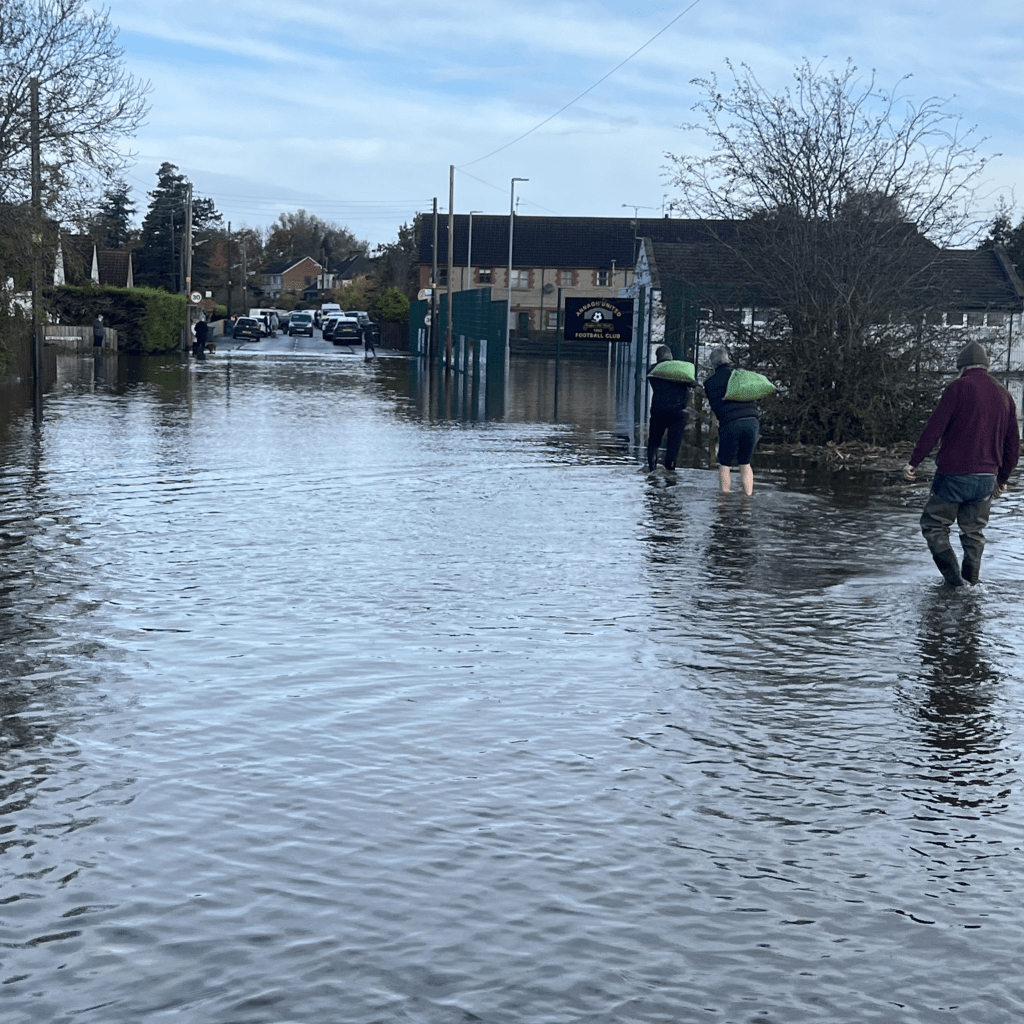
It also caused a rapid change of plans; the Portadown club’s clash at the weekend with Ballyclare Comrades, initially scheduled for their home Tandragee Road venue, was quickly switched to Dixon Park, while their BetMcLean Cup last-16 showdown at home to local rivals Loughgall has been shelved.
Due to play host on successive weekends against Knockbreda and Bangor later this month, quite how they will play out – or, indeed, where or even when they will take place – has not yet been confirmed either.
Others like Amateur League trio Drumaness Mills, Ballynahinch United and Killyleagh YC also shared videos and pictures on their social media platforms demonstrating just how severely last week’s floods had hampered operations.
The root cause of the heavens opening on such a biblical scale, which in turn led to dangerously rising water levels, has been attributed to climate change.
Yes, inevitably, there are nay-sayers, but let’s face the facts. The world is changing and some form of adaptation must happen.
After all, Annagh manager Ciaran McGurgan raised a valid point: “If the pitch were to flood in a year’s time, where does that leave us? We are totally in the unknown. How long will it take for the water to go away?”
Bearing that in mind, if and when Sub-Regional Funding for football grounds is released, an accompanying analysis of where flood protection measures can be implemented would not do the least bit of harm.
Annagh’s pitch lies on a floodplain and, if freak natural events like these are to become more commonplace in the future, this may not be an isolated barrage.
Likewise in places such as Drumaness, Killyleagh, Ballynahinch and anywhere else that was adversely affected. They know they are not immune should, as McGurgan suggests, similar events happen once again in 12 months’ time.
A study into which clubs are most likely to be on the wrong end of flooding – those that do lie on floodplains, or are in close proximity to rivers, canals and estuaries – should be conducted to best assess how to put in added protections and devise action plans that minimise the impact of natural weather events and climate change on football clubs in the Irish League.
It’s still fresh in the memory that Institute lost the Riverside in August 2017 when overnight rainfall caused the River Faughan to burst its banks.
After this fresh warning sign in 2023, it’s key that steps are taken in the present to prevent another such catastrophe.
Featured image from Annagh United Social Media.
- It’s unfair to put blame at feet of Linfield and Cliftonville for Irish Cup Final crowd disorder
 A penny for the thoughts of Linfield and Cliftonville this week. This year’s Irish Cup Final was a spectacular in every sense. Nearly 15,000 packed inside Windsor Park for the biggest-attended domestic fixture in Northern Ireland this century and an occasion to savour that, for the most part, featured backing from both sides that supported… Read more: It’s unfair to put blame at feet of Linfield and Cliftonville for Irish Cup Final crowd disorder
 - Irish League chiefs must improve provisions in place to attract younger fans and families
 Let’s get a basic fact of life out of the way first – no one likes a price hike. No one likes a price hike in the same way that no one likes paying taxes, bills, debts, insurance and other such necessary expenses which, in themselves, are rising amid a general rise in the cost… Read more: Irish League chiefs must improve provisions in place to attract younger fans and families
 - How the Irish FA’s new ‘Conference Layer’ for intermediate football can be big hit or own goal
 Changes to the intermediate football sphere in Northern Ireland have long been touted and, going by the Irish FA’s latest update on the topic, closer than ever to coming to fruition. From the 2026-27 campaign, a new ‘Conference Layer’ will be in effect as part of a radical shake-up of the intermediate levels of the… Read more: How the Irish FA’s new ‘Conference Layer’ for intermediate football can be big hit or own goal
 - Steven McCullough’s crucial goal in relegation play-off seals him as a Ballymena United great
 There’s been a change in priorities for Ballymena United during recent years – albeit not necessarily the type supporters would’ve perhaps wanted. In 2019, the Braidmen were the second best team in the Irish League. Runners-up behind Linfield that year, and just seven points adrift of top spot, the peak years of David Jeffrey’s tenure… Read more: Steven McCullough’s crucial goal in relegation play-off seals him as a Ballymena United great
 - Ending Cliftonville’s Irish Cup drought proves Jim can fix it… now he must target league glory
 Finally, it’s Cliftonville’s year in the Irish Cup. An agonising waiting game ends at last and a drought that lasted 45 painful years is over in one burst of champagne rain. Since 1979, the Reds have contrived to fail in various ways in their pursuit of that elusive ninth Irish Cup – until a man… Read more: Ending Cliftonville’s Irish Cup drought proves Jim can fix it… now he must target league glory
 Football Chatters
Leave a comment