
Summer football is a hot topic in the Irish League. Some agree with the idea, others disagree and, invariably, those in each camp have their reasons for whether they would retain or alter the structure of the season.
For many traditionalists, festive occasions like the regional cup Finals and the slate of Boxing Day derbies are too good to give up.
Often, Christmas is a time when family comes home and free time is spent doing these sorts of things. They’re considered staples not just of the footballing calendar but from a personal point of view as well, bringing with it a sentimental value that, understandably, is hard to let loose – but there are those who would like change.
That includes within the NI Football League and, in particular, the organisation’s CEO Gerard Lawlor, who has regularly spoke in favour of a calendar switch.
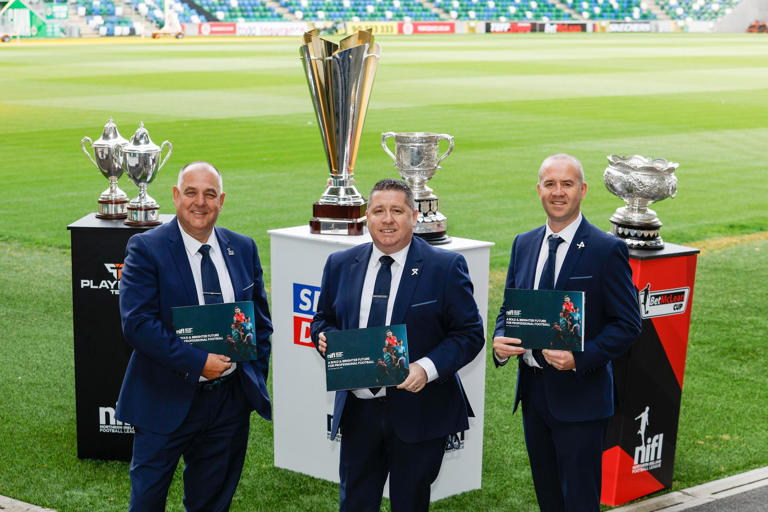
In September, Lawlor unveiled NIFL’s five-year strategy titled ‘A Bold and Brighter Future for Professional Football’.
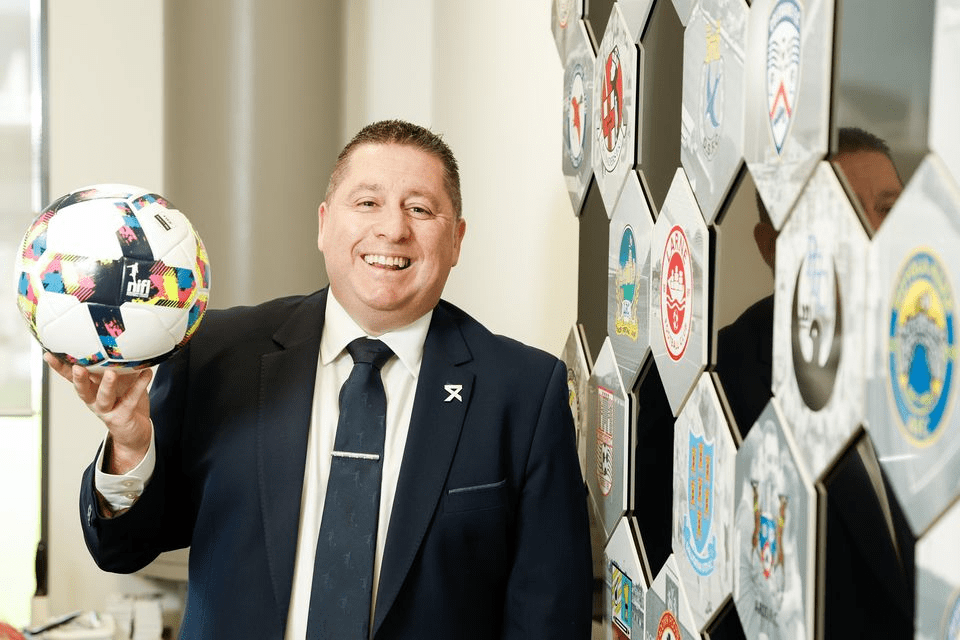
Within that detailed proposal outlining the league body’s plans for the next half-decade was the implementation of a ‘change to the professional game playing calendar’.
But former Cliftonville chairman Lawlor was keen to outline in his mind that this was not exclusive to the summer and that long-running traditions should be preserved.
“We know that clubs and fans are very passionate around Boxing Day games, so something like starting in May and running to February would be a possible starting blueprint,” he said.
“We have a football audience who are looking for football during that period. It will also allow us to have better broadcast deals because we won’t be competing against other leagues.
“We also have better weather, pitches, and it prepares our teams better for European games. There are lots of factors, good and bad.
“I don’t see it happening within the next two years. Three years, possibly. That’s when I could see a tweak in the calendar.”

Lawlor expressed clearly what he believes the benefits of playing during the summer months would be and, yes, in a growing era of professionalism – especially at the top end of the pyramid – it is only natural that questions be asked how to accelerate and build on recent positive growth across the domestic landscape.
With respective seven-figure investment from Ali Pour and Kenny Bruce at Glentoran and Larne that has enabled both clubs to go full-time in recent years, with Linfield and Crusaders (on a three-quarter basis) also having fully professional models in place, more money is flowing in.
Carrick Rangers harbour ambitions of going that way after American businessman Michael Smith became their majority shareholder, while Cliftonville are undertaking a hybrid model and have hired their first-ever full-time manager in Jim Magilton and Coleraine’s expected takeover by Ranald McGregor-Smith and Patrick Mitchell has been progressing steadily.
European windfalls carry an added significance today, and the Europa Conference League’s introduction two years ago has fuelled clubs with optimism that a Northern Ireland outfit could soon represent in a European group stage.
That means six-figure cash sums as you advance through qualifying phases. It’s also made the end-of-season European play-off decider the most lucrative match in the schedule.

On the contrary, though, there are those that would argue a new top-six/bottom-six split has emerged during the past five years.
Those among the latter, including historical talent factories like Ballymena United and Glenavon, are not yet able to transition to a full-time model and must find more innovative ways to compete.
That’s not to say they can’t, but the objective has got much tougher for two clubs who have been close to the summit in the past decade.
Those days feel like a long time ago already.
Indeed, would playing during the summer months suit themselves or their players as well as one of the current top guns? Perhaps not if the stars of the show have fixed holiday periods during that time, which is the case in professions such as teaching.
Similarly, there are many players across the various levels who play in both codes. Does this structure suit those who may be in GAA club or inter-county action and therefore must find a way to do both?
Another talking point surrounds the women’s football calendar, where there’s already a calendar-year set-up in place. Particularly in the lower leagues, many clubs play at leisure centres and use external facilities – will that be adversely impacted and, if so, how is disruption minimised?
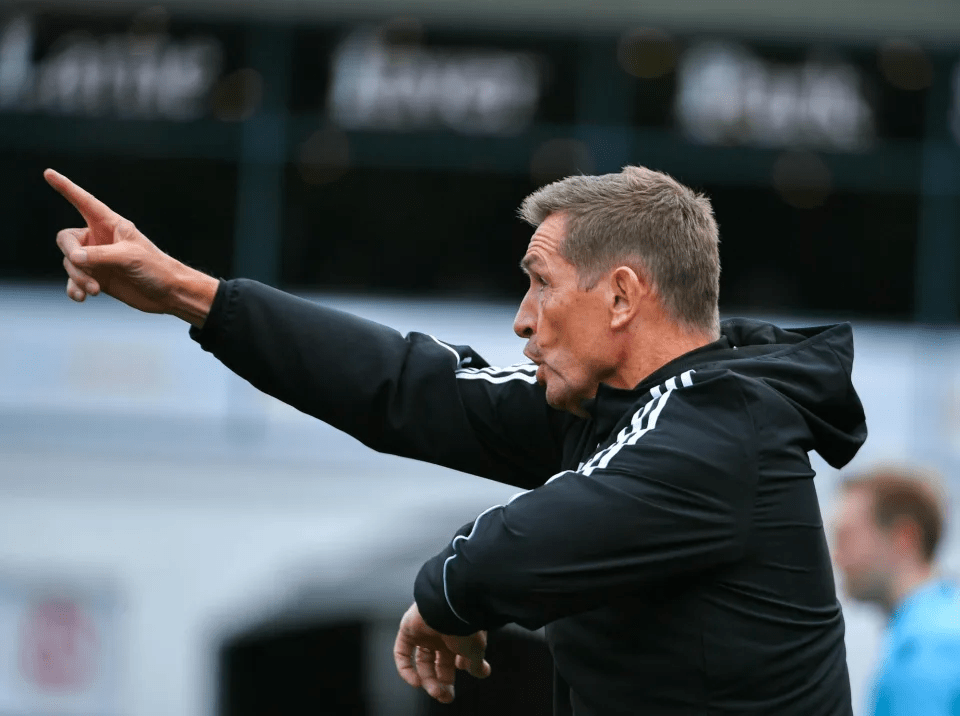
If NIFL’s ambition is to change the calendar, a pragmatic approach must be taken.
That requires consultation – Lawlor has already promised that this will happen – and likely a phased or ‘test’ approach given that, on the face of it, to adjust so suddenly would prove counter-productive for some.
“If that works, then we could look at another shift, maybe moving a month back or forward,” added the league chief.
“So, we have to take the challenges on board and explore the benefits.”
Lawlor also wants to see more clubs adopt a full-time model, boldly suggesting last August that he wanted to see 80 per cent of the top-flight either being full-time or in the process of adapting their model to go fully professional by 2025.
That was derided in some quarters, but that intention may be closer to fruition than was expected at the time.
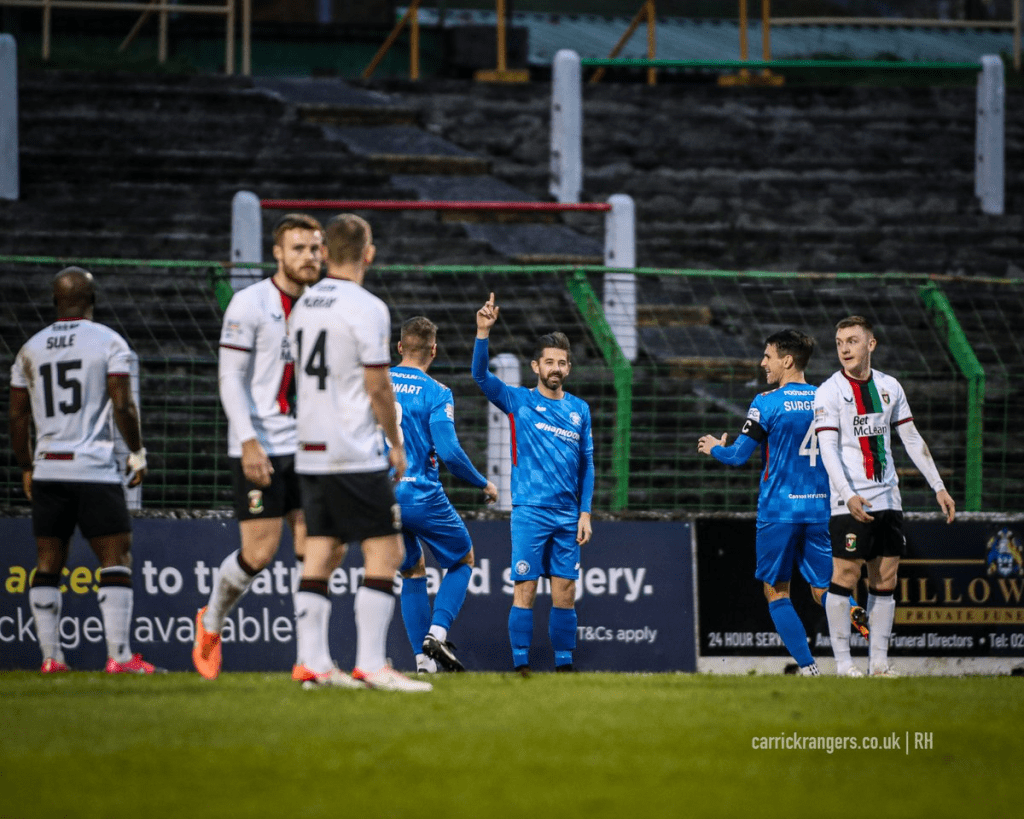
In regards to a season change, a full analysis can’t be provided unless it happens in practice, so maybe a trial basis is no bad thing to assess popularity and efficiency. Coleraine manager Oran Kearney had threw his hat in the ring and suggested doing just that, and if it weren’t to prove successful there and then, it could be dusted under the carpet and changed back across calendar years again like it has been in the 130-plus years of the Irish League.
Lawlor is a thinker. He’s also acted on his ideas and produced some positive results that have given the league more exposure. This would be his bravest yet and, if it were to be successful and he were to be lauded for it, it would prove revolutionary.
And he deserves credit for that. He wants to strike the iron while it’s hot rather than rest on his laurels.
Nevertheless, should NIFL bosses look to put this plan into motion, there is a duty of care that they can’t afford to neglect.
Featured image from Phil Magowan/Press Eye.
- It’s unfair to put blame at feet of Linfield and Cliftonville for Irish Cup Final crowd disorder
 A penny for the thoughts of Linfield and Cliftonville this week. This year’s Irish Cup Final was a spectacular in every sense. Nearly 15,000 packed inside Windsor Park for the biggest-attended domestic fixture in Northern Ireland this century and an occasion to savour that, for the most part, featured backing from both sides that supported… Read more: It’s unfair to put blame at feet of Linfield and Cliftonville for Irish Cup Final crowd disorder
 - Irish League chiefs must improve provisions in place to attract younger fans and families
 Let’s get a basic fact of life out of the way first – no one likes a price hike. No one likes a price hike in the same way that no one likes paying taxes, bills, debts, insurance and other such necessary expenses which, in themselves, are rising amid a general rise in the cost… Read more: Irish League chiefs must improve provisions in place to attract younger fans and families
 - How the Irish FA’s new ‘Conference Layer’ for intermediate football can be big hit or own goal
 Changes to the intermediate football sphere in Northern Ireland have long been touted and, going by the Irish FA’s latest update on the topic, closer than ever to coming to fruition. From the 2026-27 campaign, a new ‘Conference Layer’ will be in effect as part of a radical shake-up of the intermediate levels of the… Read more: How the Irish FA’s new ‘Conference Layer’ for intermediate football can be big hit or own goal
 - Steven McCullough’s crucial goal in relegation play-off seals him as a Ballymena United great
 There’s been a change in priorities for Ballymena United during recent years – albeit not necessarily the type supporters would’ve perhaps wanted. In 2019, the Braidmen were the second best team in the Irish League. Runners-up behind Linfield that year, and just seven points adrift of top spot, the peak years of David Jeffrey’s tenure… Read more: Steven McCullough’s crucial goal in relegation play-off seals him as a Ballymena United great
 - Ending Cliftonville’s Irish Cup drought proves Jim can fix it… now he must target league glory
 Finally, it’s Cliftonville’s year in the Irish Cup. An agonising waiting game ends at last and a drought that lasted 45 painful years is over in one burst of champagne rain. Since 1979, the Reds have contrived to fail in various ways in their pursuit of that elusive ninth Irish Cup – until a man… Read more: Ending Cliftonville’s Irish Cup drought proves Jim can fix it… now he must target league glory
 Football Chatters
Leave a comment