
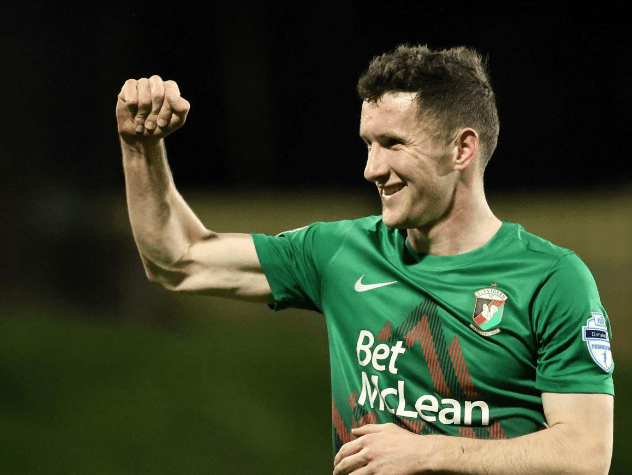
Over the course of an enthralling 2023 in the Irish League, one of the more sombre notes has been the sight of some serious injuries.
Be it Linfield shot-stopper David Walsh sustaining a severe blow to the head in an accidental coming-together with Larne counterpart Thomas Maguire in the County Antrim Shield decider in January, Annagh United’s Ryan Moffatt sustaining a leg injury so bad that it caused his side’s Playr-Fit Championship duel with Institute to be abandoned in September or Ards defender Michael Ruddy collapsing following a clash of heads against Stute in the same competition in mid-October, some worrying sights have sadly been witnessed.
Recently, it was feared that Glentoran midfielder Bobby Burns had suffered a neck injury in a collision with the Seaview fencing during a match against Crusaders. Thankfully, there wasn’t any damage to that area, and Burns – who suffered a broken jaw in two places – can look forward to his return to action, but his manager Warren Feeney admitted he got stark reminders of a horror moment for Bath City striker Alex Fletcher who, in 2022, almost died after suffering a fractured skull when he collided with a barrier.
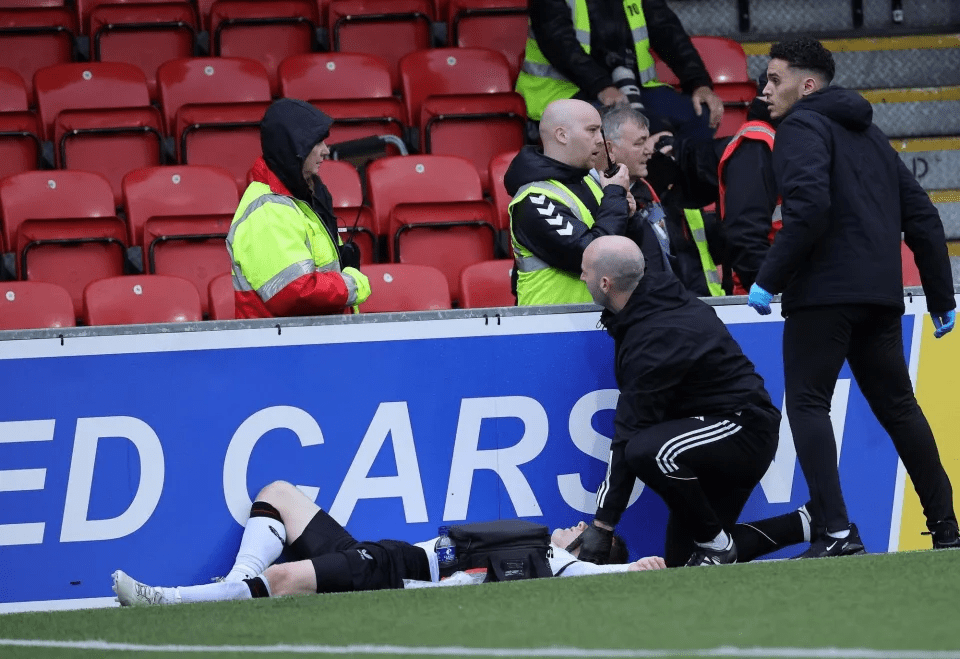
A talking point that has rightfully emerged from this is just how adequate provisions are for dealing with these sorts of scenarios.
In Moffatt’s case, he revealed in the aftermath that he was in ‘excruciating pain’ for an hour and 45 minutes before the ambulance arrived.
“The paramedic couldn’t get me into the car because my knee was so hard to manage,” the former Banbridge Town man told the Belfast Telegraph after suffering a dislocated knee and ruptured patellar tendon against Institute. “I had to be transported to Craigavon Hospital in the Annagh minibus.
“The knee popped out on the way into the hospital and the pain was terrible. I received brilliant help, but it was serious pain while lying there for two hours.
“It would be great to have expert medical staff at all games. I know it comes down to finances and personnel, but something needs to be done.”
There is strain on the NHS and finances should most certainly be factored in, but the bottom line is that, though having an ambulance present at the venue is a mandatory requirement for top-flight matches, they are not for the Championship and below.
This means that long waits to deal with injuries such as Moffatt’s are more likely, and even though clubs in the second division and below must have a trained first-aider among their staff, the specialist help an ambulance and paramedics provide are useful for working hand in hand in exactly these cases.
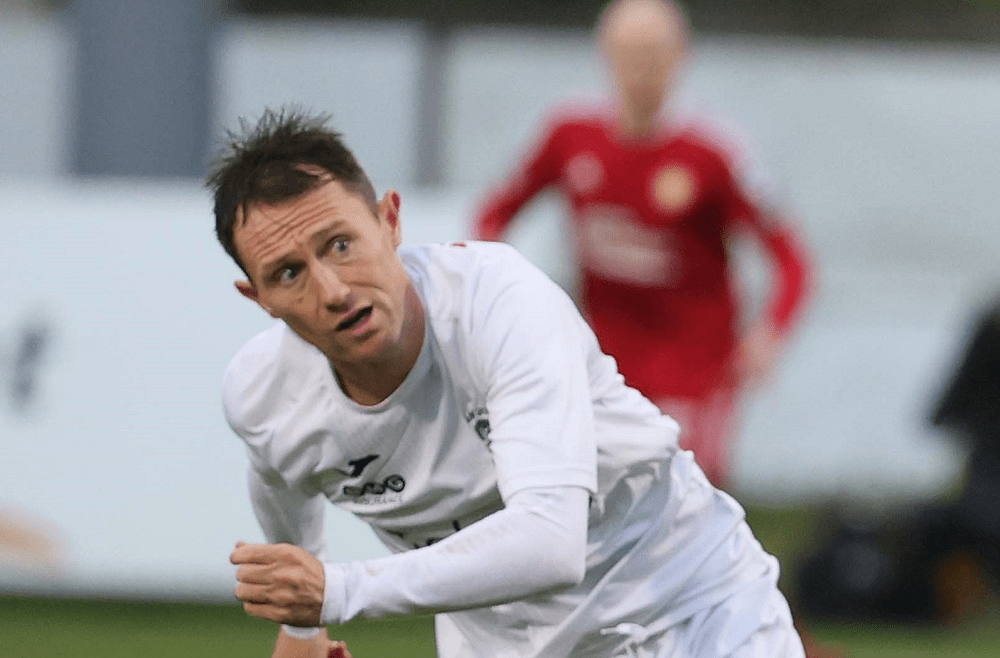
Provisions can be improved. While injuries are always going to be part and parcel of football, they fluctuate in severity and, naturally, there is significant concern and worry when one so severe comes along that it jeopardises a career or livelihood.
In a climate where the vast majority of players are part-time and have jobs that they need to take time out of while they are nursing their wounds, that takes on an added importance.
Controversy also sourced out of Burns’ injury because the match was allowed to continue, even though the Antrim native required around 20 minutes of treatment pitchside before he was carted off to hospital.
That led Glentoran into stating their intent of ‘pursuing a full and transparent investigation’ in the aftermath of the incident and the way it was handled.
“No consideration was given to his safety or dignity, nor the potential of further injury from the game continuing,” opined Glens chairman Colin Jess.
“While Bobby has undergone an operation and is now recovering, for some time his condition was considered extremely serious.
“It is essential that protocols are put in place to ensure this doesn’t happen again and that no other player from any club should be treated in such a neglectful way.
“I am sure that the NIFL family will agree that this incident should be fully investigated and that all players’ safety is of paramount importance in such circumstances.”
Said players are the main attraction, and their safety while doing what they do best should always be at the forefront.
Therefore, on the back of these incidents, the powers that be would be wise to look into what ways in which they can guard and futureproof the players’ wellbeing even better in 2024.
Featured image from Glentoran FC Website.
- It’s unfair to put blame at feet of Linfield and Cliftonville for Irish Cup Final crowd disorder
 A penny for the thoughts of Linfield and Cliftonville this week. This year’s Irish Cup Final was a spectacular in every sense. Nearly 15,000 packed inside Windsor Park for the biggest-attended domestic fixture in Northern Ireland this century and an occasion to savour that, for the most part, featured backing from both sides that supported… Read more: It’s unfair to put blame at feet of Linfield and Cliftonville for Irish Cup Final crowd disorder
 - Irish League chiefs must improve provisions in place to attract younger fans and families
 Let’s get a basic fact of life out of the way first – no one likes a price hike. No one likes a price hike in the same way that no one likes paying taxes, bills, debts, insurance and other such necessary expenses which, in themselves, are rising amid a general rise in the cost… Read more: Irish League chiefs must improve provisions in place to attract younger fans and families
 - How the Irish FA’s new ‘Conference Layer’ for intermediate football can be big hit or own goal
 Changes to the intermediate football sphere in Northern Ireland have long been touted and, going by the Irish FA’s latest update on the topic, closer than ever to coming to fruition. From the 2026-27 campaign, a new ‘Conference Layer’ will be in effect as part of a radical shake-up of the intermediate levels of the… Read more: How the Irish FA’s new ‘Conference Layer’ for intermediate football can be big hit or own goal
 - Steven McCullough’s crucial goal in relegation play-off seals him as a Ballymena United great
 There’s been a change in priorities for Ballymena United during recent years – albeit not necessarily the type supporters would’ve perhaps wanted. In 2019, the Braidmen were the second best team in the Irish League. Runners-up behind Linfield that year, and just seven points adrift of top spot, the peak years of David Jeffrey’s tenure… Read more: Steven McCullough’s crucial goal in relegation play-off seals him as a Ballymena United great
 - Ending Cliftonville’s Irish Cup drought proves Jim can fix it… now he must target league glory
 Finally, it’s Cliftonville’s year in the Irish Cup. An agonising waiting game ends at last and a drought that lasted 45 painful years is over in one burst of champagne rain. Since 1979, the Reds have contrived to fail in various ways in their pursuit of that elusive ninth Irish Cup – until a man… Read more: Ending Cliftonville’s Irish Cup drought proves Jim can fix it… now he must target league glory
 Football Chatters
Leave a comment