

After a two-year hiatus, the Northern Ireland Executive is back up and running – and the to-do list in respect of domestic sport is a long one.
With preparations for the Euro 2028 Finals to account for that includes the redevelopment of west Belfast’s Casement Park, which is scheduled to host five fixtures at the continental showpiece, as well as the hot topic of Sub-Regional Stadia funding to finally release, new Communities Minister Gordon Lyons hasn’t much time to hang around.
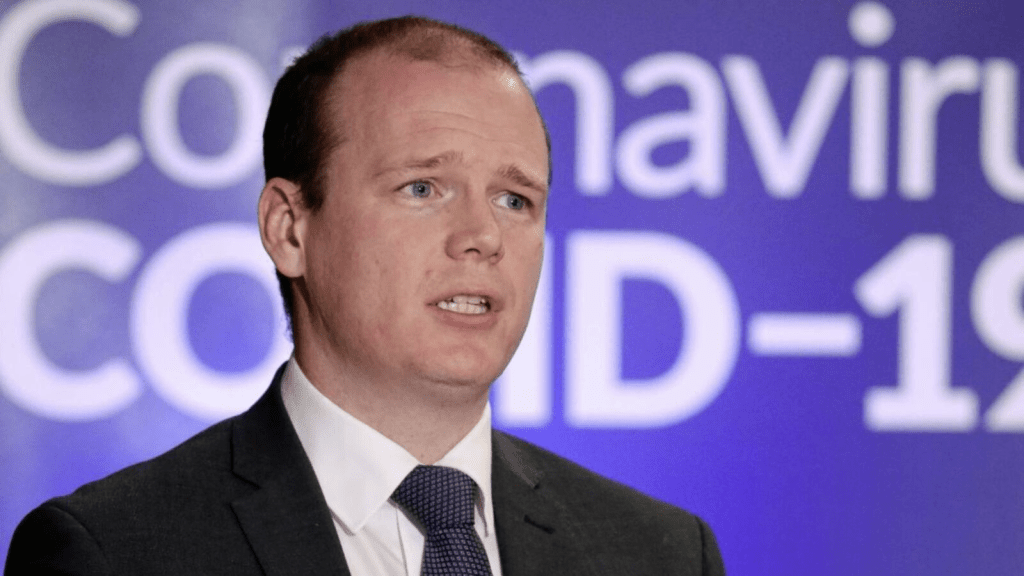
Football clubs are anxious for the release of £36.2million’s worth of money that can be used to upgrade their facilities, and the Democratic Unionist Party politician, who succeeds Sinn Fein’s Deirdre Hargey in the role, will oversee the rolling-out process.
With that sum having been agreed back in 2015, and the Sub-Regional idea first drafted up in 2011, you can hardly blame those involved in the Irish League for being impatient on this important issue.
And while it won’t cover close to what is required as a whole – chiefs at the Irish FA and NI Football League say that at least £120m is the ballpark to cover those in the top three tiers alone – making it available to sides is still a long-overdue start to building a brighter future.
Despite the well-publicised delays on stadia cash, the domestic football scene in Northern Ireland has continued to strengthen.
Outfits like Linfield, Larne and Glentoran have taken up full-time structures, while the latter two have benefited from millions of pounds’ worth of outside investment since takeovers by Kenny Bruce (2017) and Ali Pour (2019) respectively.
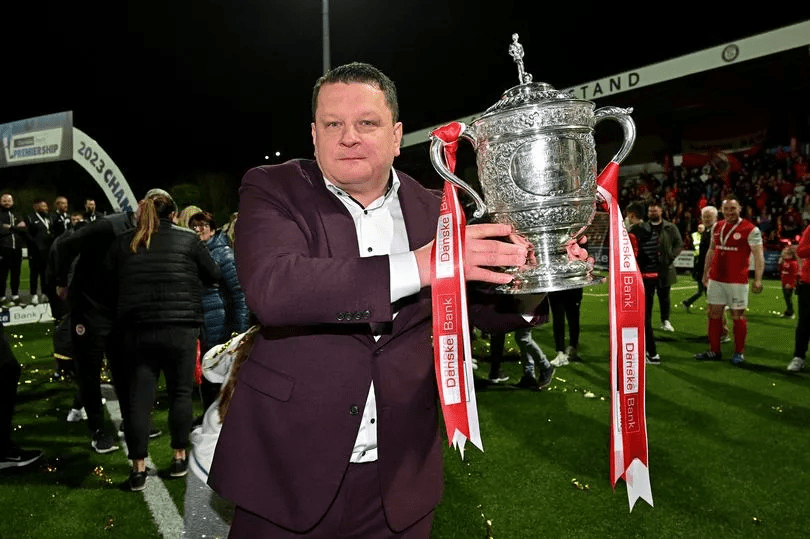
At Larne, Bruce’s reign has coincided with a total transformation of the team’s fortunes; the east Antrim club were a middling Championship club six and a half years ago and, inside that timeframe, are now reigning Premiership champions for the first time in 135 years of history.
What’s more, vast sums have been put into the facilities that means success on the pitch has been matched off it.
Inver Park is a state-of-the-art venue complete with hospitality, flourishing social offerings and freshly coated seated stands and terracing, while the Larne Academy of Sport on the old Cliff training complex to the north of the town has undergone a full makeover.
It has become a hub of the local community with more than just the Inver Reds reaping the rewards – and others want to emulate it.
Investment has also been seen of late at Carrick Rangers, under the stewardship of American executive Michael Smith as of August 2023, and Coleraine, who have just completed a deal that sees London-based home town natives Patrick Mitchell and Ranald McGregor-Smith take the reins as part of a consortium.
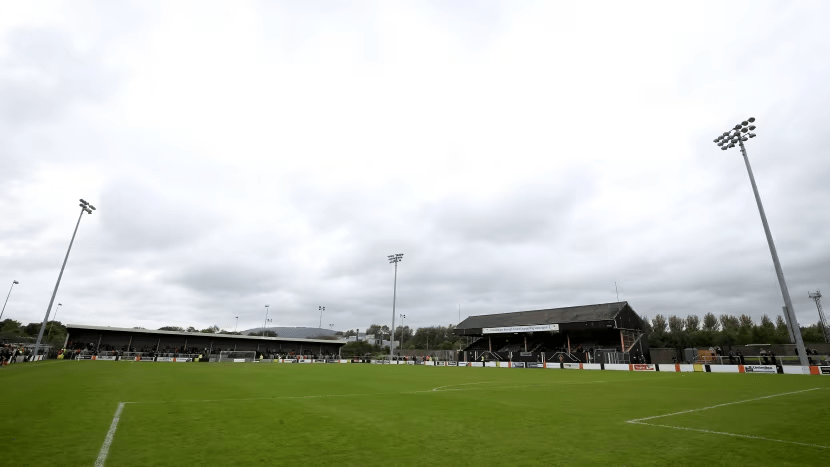
Both clubs, alongside Glentoran where proposed redevelopment of The BetMcLean Oval has long been on the radar, are keen to enhance their grounds, with Carrick having a grant worth £3.6m from Mid and East Antrim Borough Council green-lighted as they aim to upgrade their Taylors Avenue site.
And that’s only scratching the surface. So many clubs have submitted plans and want to push on, making their home the place to be.
There are others who want to make a place their home, too. See Playr-Fit Championship trio Ards, Newington and Institute, all of whom play their home matches at grounds that are not their own.
In the ‘Ton’s case, they have never had a permanent place of their own in almost 50 years of existence and are tenants in Larne at Inver Park as of 2023 – away from their north Belfast home base – while Ards have recently put in a planning proposal to make an awaited return to playing home fixtures in Newtownards for the first time in over two decades.

Their league mates Bangor are, meanwhile, another to be discussing the theme of private funding – potentially to the tune of £1million with North American investors interested.
The Irish League has become attractive for outsiders looking in to be a part of, and that’s why Sub-Regional Stadia funding is such a passionate subject.
There’s no doubt that the NIFL is progressing, there’s no doubt clubs are hungry to develop their models and there’s no doubt of the collective ambition to make the product better.
Consequently, crowds are increasing year on year across all divisions – indeed, a spectacular rise of 85 per cent was recorded in the Championship for 2023/24 – and the standards of player are growing at a rapid rate across the pyramid.
That desire for improvement must be matched by the willingness of the Government to support teams with their projects and aspirations.
We should by no means stop at the ring-fenced £36.2m, but its release, it is hoped, will be a springboard to bigger and better things.
The base sum is insufficient, but if Windsor Park and Ulster Rugby’s Ravenhill have already received their share from the same family of public funding – Casement Park, which is due to primarily host Antrim GAA games and major Finals and be a hub for the Ulster county board, is expected to follow – it is only right that we get started and roll the first phase of cash out.
With that, extensive surveying of specific needs for clubs and the impact of factors such as climate change must also be done.
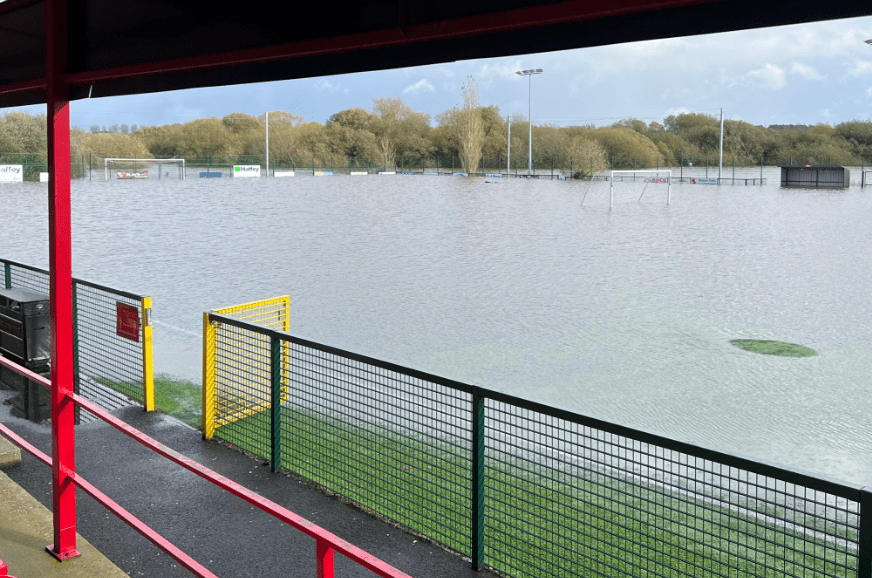
Annagh United’s BMG Arena, which lies on a floodplain, was coated by sitting water amid a torrential downpour in early November, and while the pitch was saved in the end and there wasn’t the need for the Portadown club to relocate, a valid point was raised afterwards by manager Ciaran McGurgan.
He said: “If the pitch were to flood in a year’s time, where does that leave us? We are totally in the unknown. How long will it take for the water to go away?”
And he’s spot on. It is not solely for cosmetics why sides are so eager for this money to be made available; it could safeguard their futures.
So, there is much to be done and many projects of different shapes and sizes to fulfil, thereby putting a big responsibility on the shoulders of East Antrim MLA Lyons.
The quicker funds are rolled out, the better. The sooner a bigger pot is created, the better. It is high time for constructive work to be done that can benefit the entire football landscape; after all, given how domestic football has brought communities together, there’s no question that the clubs would be deserving of administrative support.
Sides are serious about acting in the interests of those within their heartland, and the networks that come with that can’t be underestimated.
Facility upgrading only serves to boost that. Let’s get going then, shall we?
Featured image from Democratic Unionist Party Website.
- It’s unfair to put blame at feet of Linfield and Cliftonville for Irish Cup Final crowd disorder
 A penny for the thoughts of Linfield and Cliftonville this week. This year’s Irish Cup Final was a spectacular in every sense. Nearly 15,000 packed inside Windsor Park for the biggest-attended domestic fixture in Northern Ireland this century and an occasion to savour that, for the most part, featured backing from both sides that supported… Read more: It’s unfair to put blame at feet of Linfield and Cliftonville for Irish Cup Final crowd disorder
 - Irish League chiefs must improve provisions in place to attract younger fans and families
 Let’s get a basic fact of life out of the way first – no one likes a price hike. No one likes a price hike in the same way that no one likes paying taxes, bills, debts, insurance and other such necessary expenses which, in themselves, are rising amid a general rise in the cost… Read more: Irish League chiefs must improve provisions in place to attract younger fans and families
 - How the Irish FA’s new ‘Conference Layer’ for intermediate football can be big hit or own goal
 Changes to the intermediate football sphere in Northern Ireland have long been touted and, going by the Irish FA’s latest update on the topic, closer than ever to coming to fruition. From the 2026-27 campaign, a new ‘Conference Layer’ will be in effect as part of a radical shake-up of the intermediate levels of the… Read more: How the Irish FA’s new ‘Conference Layer’ for intermediate football can be big hit or own goal
 - Steven McCullough’s crucial goal in relegation play-off seals him as a Ballymena United great
 There’s been a change in priorities for Ballymena United during recent years – albeit not necessarily the type supporters would’ve perhaps wanted. In 2019, the Braidmen were the second best team in the Irish League. Runners-up behind Linfield that year, and just seven points adrift of top spot, the peak years of David Jeffrey’s tenure… Read more: Steven McCullough’s crucial goal in relegation play-off seals him as a Ballymena United great
 - Ending Cliftonville’s Irish Cup drought proves Jim can fix it… now he must target league glory
 Finally, it’s Cliftonville’s year in the Irish Cup. An agonising waiting game ends at last and a drought that lasted 45 painful years is over in one burst of champagne rain. Since 1979, the Reds have contrived to fail in various ways in their pursuit of that elusive ninth Irish Cup – until a man… Read more: Ending Cliftonville’s Irish Cup drought proves Jim can fix it… now he must target league glory
 Football Chatters
Leave a comment