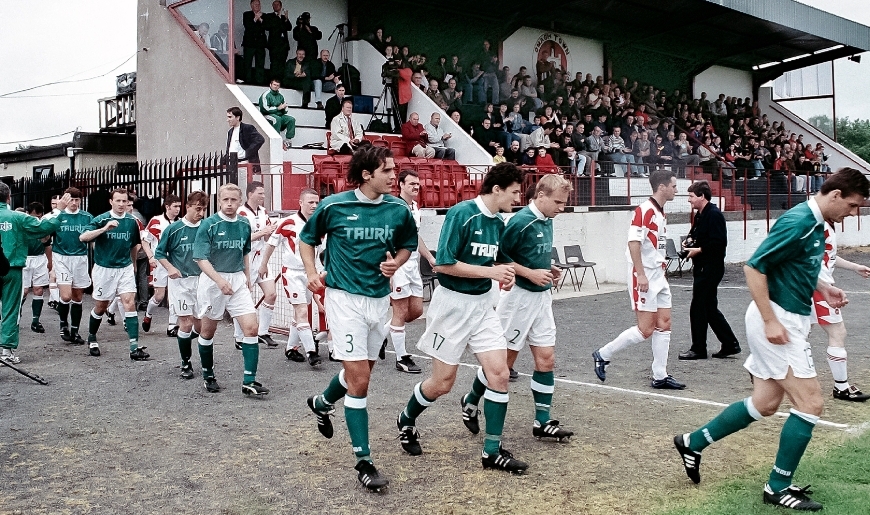
The demise of Omagh Town in 2005 left a significant void. In Omagh itself and in the Irish League. The abruptness with which it all happened, how swiftly they ceased to be after their relegation from the Premiership, how speedily St Julian’s Road simply became a structural memorial of their old occupiers.
A club who, within the seven years beforehand, twice plied their trade in Europe and had arguably their best-ever squad. Now, from 2005 on, the Tyrone town has not been close to any top-tier return. Fans of the old institution dream of when their club was flying high, regretting that in the present exists emptiness.
The stadium nowadays is no more, replaced by a public ground after years of decay. Derby duels with the likes of regional rivals Dungannon Swifts are but distant memories, and 17-and-a-half years on it feels almost ghostly when you walk on the current site of St Julian’s Park and remember there used to be a pretty good football club that played there. A side that entertained teams from Slovakia and Belarus in the Intertoto Cup less than a decade before dissolution, and even the might of Manchester United.
After dropping out of the top-flight nine points from absolute safety and seven from 15th-placed Crusaders – led then as they are now by Stephen Baxter – in the play-off position, there was to be no continuation in the First Division. Donning a vibrant red, white and black home strip, there was to be a rather colourless end, leaving an irreplaceable hole.
In their final season of existence, the 2004-05 campaign, Omagh Town finished on 17 points at the bottom of what was a 16-team league.
Ards occupied the last safe berth in 14th-position. The Crues of north Belfast, notably successful under Roy Walker in the 1990s, finished in 15th to at least earn the right to save themselves, but it was in vain after being defeated in the relegation play-off by fellow sleeping giants Glenavon.
With Baxter taking charge for the second half of that season, trust was placed in the former Seaview striker to resurrect their hopes.
They dropped down to the second-tier – classified then as intermediate, albeit coming under the senior tag today – and won the famed festive Steel and Sons Cup decider on Christmas Day en route to the title and restoration of their Premiership place.
All this time later, Baxter has never left. The Belfast boss has overseen a lot of change with the Hatchetmen, including the installation of an artificial playing surface and the relatively recent transition to a hybrid three-quarter full-time model. He holds the longest active continuous streak for a manager in charge of a single club in Europe, celebrating 18 full years at the helm later this month, and has guided his red and black-striped troops to three top-tier titles and every senior trophy there is to win.
Now, the Shore Road club are thriving. An attacking side with a formidable home record who find themselves in another title hunt this term.
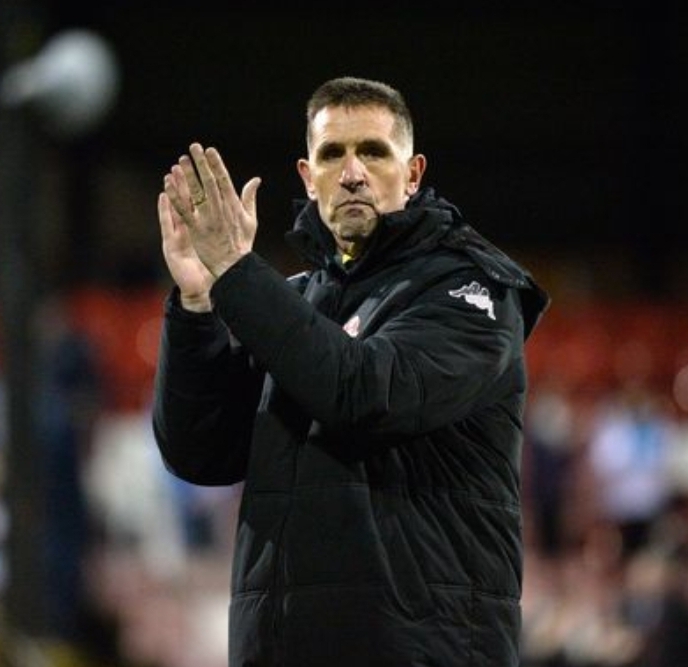
But Omagh Town did not even have the chance to get started.
The 2004-05 season ended in May. Omagh announced they had folded in June. It felt like it all happened at the snap of a finger.
Their final game, on the 30th April 2005, was with their drop-down confirmed. A solitary Alan Blair strike handed north west outfit Institute a 0-1 away win in front of a small crowd for a perceivedly insignificant encounter.
But it was to prove consequential. The stroke city side, likely unbeknownst to them, were the last visitors to St Julian’s Road.
And Blair was the last goalscorer there.
“Regretfully, the existing Omagh Town Football and Athletic Club has to declare that it cannot continue operating and therefore ceases to trade or operate”
Omagh Town club statement announcing the cessation of trading and, in turn, their existence in June 2005
This was an Omagh outfit with no chairman, no treasurer, no secretary. No social club, either, since it had closed down. Yet there was hope that a rescue plan could be put in place to save Paul Kee’s men.
The week prior to that home reverse against ‘Stute was the week their demotion was all but confirmed. In a derby, no less.
Seven days prior at Stangmore Park, despite Ryan Mullan’s deadlock-breaker for the visitors, county rivals Dungannon Swifts turned the tide and consigned their near-neighbours to relegation with a 2-1 turnaround victory.
Six weeks later, Omagh Town folded. Only the Swifts would account for senior football in the western county of Tyrone the following campaign.
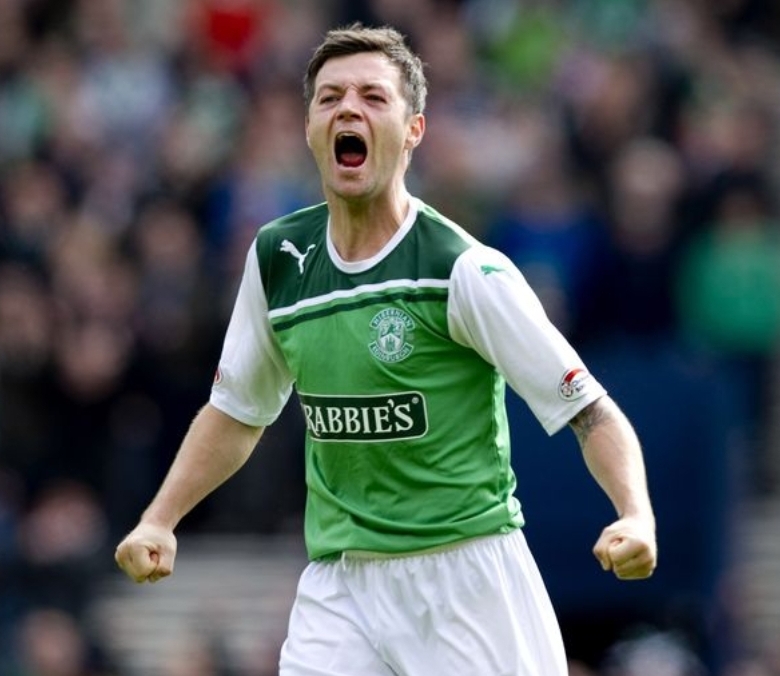
“From a footballing point of view, it is disappointing as there were only two senior clubs in Tyrone,” stated a regretful Kee, now the head coach of east Belfast second-tier side Harland and Wolff Welders.
“Most of the players were out of contract anyway and only one or two had contracts.”
A statement from the club themselves read: “Over many years the management committee of Omagh Town has struggled to keep senior football alive in Omagh but unfortunately in recent times it has become too difficult to keep operating.
“A number of major problems have beset the club this year, the two most difficult being the dropping out of the Premier League and the closure of the social club some months ago.
“The management committee cannot sustain the club in its present format or structure because of an accumulated financial deficit which means there are no resources to keep the club going given that there is no current income coming into the club.
“Regretfully, the existing Omagh Town Football and Athletic Club has to declare that it cannot continue operating and therefore ceases to trade or operate.”
Supporters who had been looking forward to the following season now had no following season to look forward to. A proud club who had met a tragic and really rather unbefitting end.
That hole where the heart used to be is still prevalent almost two decades on. But not that their past glories have been left behind.
Foundations on which Omagh Town were built started much from scratch.
Founded in 1962 as Omagh Celtic, it was in 1969 that the club adopted its most recognisable name. A colour code of maroon and blue was first adopted, while a place they could call home for an extended period of time was still to be established in their formative years of existence.
In truth, it was still some time until their true identity was cultivated. By the turn of the 1980s, however, they had eventually settled on a palette of white, red and black, while in 1990, having obtained a lease to build on a council dump off St Julian’s Road, they moved into what became their full-time home.
Reprising the name of the street, a 5,000-capacity arena with a grass pitch now lay in place for fans to attend on matchdays.
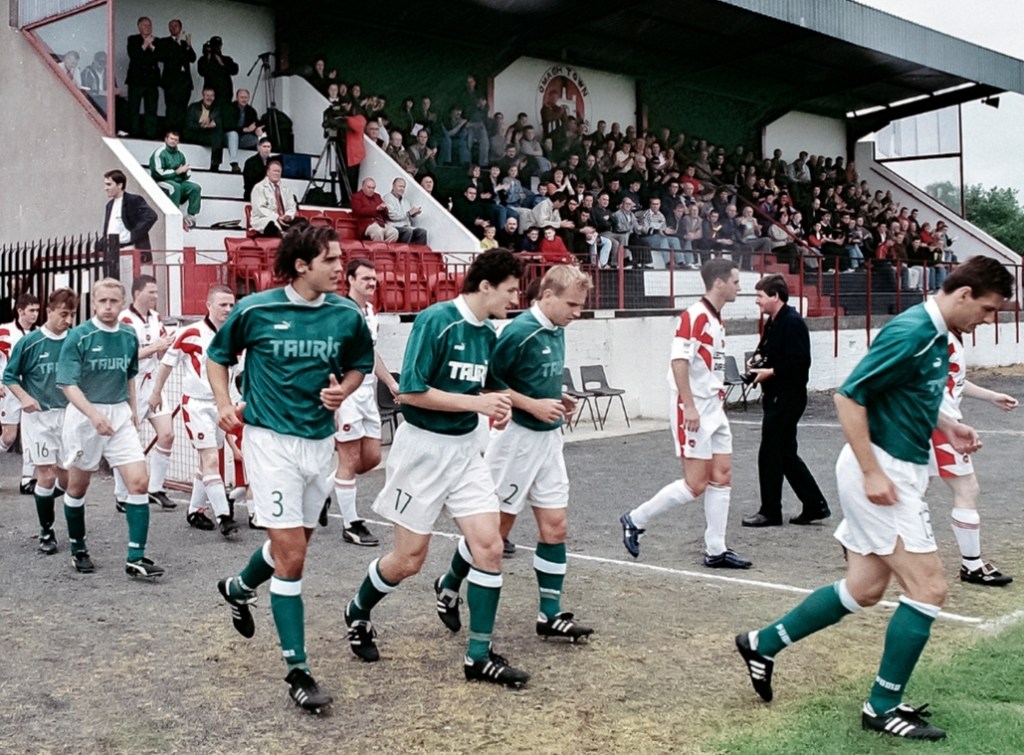
And it was apt timing. After all, 1990 was also the year the town would first be represented in the Irish top-flight, their inaugural campaign with senior status. As the sole Tyrone team in the division in 1990/91, they performed creditably, finishing 12th of 16.
The following season, The Town made the top half, edging Bangor – runners-up the previous campaign – by virtue of a slightly superior goal ratio to join big-hitters like Linfield, Glentoran, Portadown, Crusaders and Glenavon among the highest-placed eight teams in the country. Indeed, 1992 proved to be one of Omagh’s most revered years, backing up their impressive league displays with the Budweiser Cup. It certainly was the pick of the seasons in their first spell in the top-tier, as finishes in 12th (1993) and 16th (1994 – bottom-placed but at that point with no relegation) foreshadowed the denouement of that stint.
The 1994/95 term was one of the most infamous in Irish League history given the scale of restructure at the end of it.
That meant relegations. Eight of them, to be precise. Eight drop-downs to turn a 16-team flight into two divisions, effectively cutting the league in half – not deduced solely on that season but over the previous two as well, and on that metric Omagh were unfortunate to fall victim.
They, alongside Coleraine, Distillery, Ballymena United, Carrick Rangers, Larne, Ballyclare Comrades and Newry Town (now Newry City, in line with Newry being awarded city status in 2002), were demoted to form the new First Division. Such was the wild and perhaps controversial nature of the system that Coleraine, who finished in 7th-place, went down, while Bangor, in 11th, stayed up despite recording 11 fewer points.
Omagh placed 9th, which was never going to be enough to stave off the drop. The nature of hows and whys behind that campaign would take a 3,000-word article in isolation to explain!
Town didn’t waste time on working their way back up, mind, since the return of the popular Roy McCreadie to the manager’s post coincided with their bounce-back two years later in 1997 – the top-tier now expanded to 10 clubs, and with active promotion and relegation rather than on the basis of election like before. They reached the Irish Cup semi-finals in the season of their promotion, ultimately falling in the last-four to eventual winners Glenavon, and joined Ballymena in making the step-up by the season’s end.
Survival in their first season back in 1998 via the relegation/promotion play-off had come in a campaign where the rights to an additional treat were won – the town of Omagh was to feel the pride of being represented in Europe.
When Slovakian side Rimavská Sobota were pulled out to face this brave band from Tyrone in the Intertoto Cup, there was quite the clamour. Understandably so, and made all the more palpable when just a solitary 81st-minute strike in the away leg split the teams when the action returned to St Julian’s.
And how it must have felt when Eamonn Kavanagh scored The Town’s first-ever European goal to even it up on aggregate. A 1-0 half-time lead, spurred on by the big occasion and boosted by the belief that this group of men forged together in unison could not only make up the numbers on the continent, but win and make it to the next phase.
Alas, the fairytale ending was not quite to be. Just before the interval, Gabriel Ungvölgyi had levelled it on the day for Rimavská, subsequently followed by Roman Pribyl’s strike that – for defender John Crilly bagging an 89th-minute equaliser for the valiant, vivacious hosts – sealed the spoils for their visitors from the European mainland.
From that team who so bravely threatened to break into the second round, there are some names that stick. Midfielder Kavanagh, of course. Barry McCreadie. Michael Kelly. Stephen Johnston. The late, great Frankie Wilson. Names from a collective who truly showed their best side across those two fixtures back in the June of 1998.
It was not to spur the club on to improved fortunes, however. A season starting on the back of a far more human tragedy than any poor result – as 29 people unconscionably lost their lives in the aftermath of the Omagh bombing in August 1998, the single deadliest incident of The Troubles, and cast a dark cloud overhead – was to end in relegation.
It was not much in question. Omagh attained 21 points from their 36 matches, finishing in last place, and would have required another 14 to catch play-off representatives Cliftonville directly above them.
Back down to the First Division they went, therefore, in 1999. But, such was their resilience, straight back up they came in 2000.
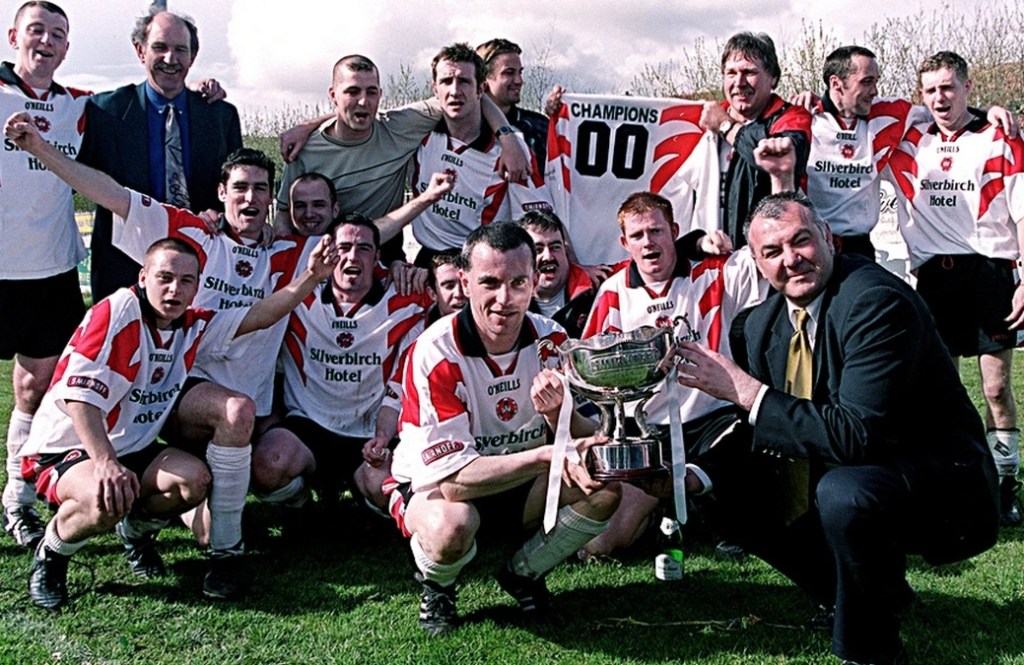
And this time they stayed there. In fact, they did a bit better than just surviving.
But before that, it’s worth talking about their actions in the summer of 1999 to raise money and support for the Omagh bomb appeal. Three sell-out matches against English Premier League giants Manchester United, Liverpool and Chelsea to raise funds and bring the community together, the capacity of St Julian’s increased to 7,000 for this special pre-season series to help generate funds in support of the appeal.
There were later controversies that emerged surrounding exactly how much of the proceeds raised actually came to be of benefit to those directly affected, with a later BBC Spotlight investigation suggesting that, of £185k raised, around a sixth of that total was going to the Omagh Fund, and that certain amounts had actually been reinvested in the club to deal with debts. The club had declined to participate in the programme in May 2000.
These reports and investigations may have tainted Omagh Town’s reputation in the eyes of some, though the pure occasion of seeing personalities like Sir Alex Ferguson – whose Red Devils were 9-0 victors on their escapade – must have nonetheless been quite something to savour.
Sticking with the year 2000, their first campaign back saw them end in 7th-place, well safe of the drop-zone. The season after, they finished in 5th-position to book their first Premier Division top-half finish in a decade, playing an open-ended brand under Kee where they both scored and conceded 55 goals.
Omagh had more than a couple of aces in their pack at that point. Perhaps none more promising than an electrifying 20-year-old from Castlederg who burst into life and made himself one of the most coveted young stars on the Irish League scene. Rumour has it, indeed, that some fullbacks are still reeling from their duels against tricky and tenacious fan favourite Ivan Sproule – an engineer full-time, both in his profession off the pitch and in his penchant for making things happen on it.
Sproule was not the first in the family to play for the club either, given his older brother John was a member of the Omagh side that won the aforementioned Budweiser Cup, beating Linfield in the decider.
“Without going on to play for Omagh Town I wouldn’t have enjoyed the career I did”
Ivan Sproule
Combine his orchestrating chance creation and instigation with the steeliness of a spine comprising the seasoned Kavanagh, Wilson, Johnston and Kelly, and you had an impressive outfit that could do a job on various different ends. A panel decisively built up of esteemed local talents, Omagh won 15 of their 36 games in 2001-02 and breached the 50-point mark. They were closer to title winners Portadown – the last of Ronnie McFall’s four title wins at Shamrock Park and, incidentally, the last season that a team from outside the Northern Irish capital won the top-flight – than they were to Ards at the bottom.
And 2002-03 proved they were no one-hit wonders either, repeating their 5th-place feat, achieving a cumulative total of 105 points across the past two terms and qualifying for Europe again. Albeit in facing Belarusian club Shakhtyor Soligorsk, it was to prove considerably less glamorous than in their first foray five years prior.
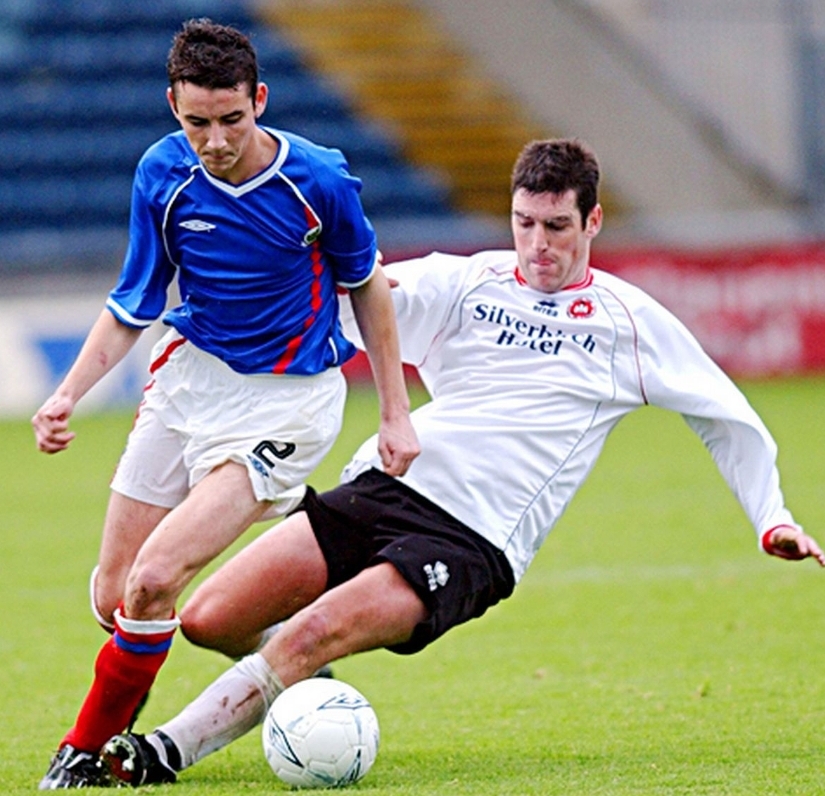
Where hope was again the prevailing emotion, losing by the only goal of the game in the first leg in eastern Europe, the return was where the incumbent champions of the Belarus top-flight laid down the gauntlet.
In a fixture played at the Brandywell, home of Derry City, Soligorsk stuck seven past their hosts. Only a solitary Sproule strike just before the interval, by which time the visitors were four to the good, was conjured up in response for one of the lower moments of what had been a glorious couple of years.
Those dates in June were to precede much more of a down year than what had been seen in the previous two seasons. They finished 13th-place of a 16-team league, avoiding the drop-down places by five points, albeit an exodus by the summer of 2004 was, tragically, so soon after one of their all-time great squads had been assembled, to signal the start of the end.
Interest in Sproule was inevitable, and it was no shock that an underperformance in 2003-04 coincided with his departure at the season’s start.
After a couple of years of impeccable service to Omagh, he moved not far north to Institute.
Then 22, the forward would go on to enjoy a sterling career. He amassed 11 caps for the Northern Ireland national team and caught the eye in Scotland, scoring a hat-trick against Rangers and in an away win at Celtic while with Hibernian having spent only six months with ‘Stute before the Edinburgh club and manager Tony Mowbray called him in for a trial.
Four years with Bristol City, where he was involved in a Championship play-off final and marginally missed out on playing in the Premier League, came before his eventual return to the Irish League at Linfield, enveloping a loan stint with Ballinamallard United before being followed by the fairytale end to his playing days at hometown club Dergview in 2017.
His adventure was maybe the most decorated of the lot, though not to speak in disservice to favourites like Kelly, Johnston and Wilson, who also departed in that span. In Sproule’s place arrived a returnee to his native town, Michael Ward – a former pupil of Omagh Christian Brothers Grammar School and such an impressive prospect coming out of Dungannon Swifts’ academy that he earned a chance in Leeds United’s esteemed system.
Having never made it beyond the Reserves, however, 19-year-old Ward’s next choice was to be Omagh Town, and the interest was mutual. He was another to thrive in an Irish League environment, going on to score 16 goals in 2005-06 and receiving a call-up to Northern Ireland’s Under-21s.
But, as fate lay its hand, it was not in red, white and black. For there would sadly be no red, white and black to wear.
After their relegation was confirmed, Omagh Town folded. And things simply haven’t been the same since.
It is not for the want of trying, though. In 2007, a new club – Omagh United – were created through the amalgamation of three local clubs, Omagh United Youth, Sperrin Athletic and Kevlin United, and got as high as the fourth-tier MUFL Intermediate A.
McCreadie, who had given the people of Omagh so many memorable moments while steering the Town ship, returned to take on this fresh task of getting big-league football back where it felt like it belonged.
But by 2010, Omagh United too came under the sword, and like their storied predecessor, regrettably ceased to be.
McCreadie, speaking to the Belfast Telegraph in 2016, expressed feelings of pessimism whether the town could hope of being back in the Premiership in times to come.
“I had hoped when Omagh United were formed that the town could get a club back in the Irish League,” he explained. “I was the manager but things didn’t work out the way I had hoped and I would doubt now if a club based in Omagh will ever return to the top-flight.
“That is a real shame given what we achieved years ago and also because there is a lot of good football talent in the area.
“That’s why I’m pleased Ballinamallard and Dungannon Swifts continue to stay in the top-flight of the Irish League because football in this part of the country needs that.”
Nowadays, the Mallards, from just outside Enniskillen, are the only Fermanagh representatives in the top three flights of the Irish League, while Dungannon have flown the Tyrone flag in the Premiership continually. Dergview are doing their bit in the Championship as well.
The Swifts experienced success in the recent past under Rodney McAree, being barely shy of five years at the time of publication since they defeated Ballymena United 3-1 to win the BetMcLean League Cup at Windsor Park. Their first-ever senior trophy accompanied a foray into the European play-offs in 2017 and a regular hanging on the coattails of established, wealthier outfits in the top half – and despite struggling to start this campaign, a succession of home wins has them now looking up at absolute survival where it seemed bleaker earlier on.
With chairman Keith Boyd at the top of the tree and incumbent boss Dean Shiels leading from the touchline, Dungannon have, to the point where it is perhaps taken for granted, been prided on a sustainable model that has a high-quality, localised academy at the fore.
McCreadie is correct. Three representatives from Tyrone and Fermanagh in the top three tiers of the pyramid makes the western part of Northern Ireland the most under-represented in the Irish League. There are 10 in Belfast alone by comparison.
And that serves to amplify the void Omagh Town left from June 2005 on, and still leave today.
“I was the manager but things didn’t work out the way I had hoped and I would doubt now if a club based in Omagh will ever return to the top-flight“
Roy McCreadie on Omagh’s football prospects following the collapse of Omagh United in 2010
McCreadie elaborated in that interview how impressed he was by Crusaders’ resurgence, after being relegated alongside Omagh that year.
“From the outside looking in, I think a decade ago they adopted short-term plans to move forward and are now adopting longer-term plans to keep them at the top for as long as possible,” he added of Baxter’s side.
“Other clubs should look at them and see them as an example. This didn’t happen overnight. It has taken years for them to get to where they are now and what impresses me is that they aren’t content, they want to be winners for years to come.”
The Crues, one of those 10 capital institutions, are a model, and that they continue to shine almost 18 years on is a serious achievement. They have built themselves back up to the point where they have full-time strategies in place and are expected to be in a title hunt season in, season out.
Their success also makes you a tad rueful. Comparatively rueful that there wasn’t another way for Omagh.
Supporters still reminisce about their escapades to St Julian’s Road. Often a trip described as being marked by cold chills and rampant downpours, and where spurts of sunshine tended to be a rarity – well, it is Northern Ireland after all – yet such was the charm of the place that there was never any question whether they would be going back next time.
They also recall being given a game by a home team with the fight and will to endure the elements. The nerves were left persistently shaking, the tension steep from minute one to 90.
Feelings of sadness must swirl through the mind that these sorts of days have now been consigned to the archives.
“Without going on to play for Omagh Town I wouldn’t have enjoyed the career I did, so it’s very disappointing,” stated Ivan Sproule, many years later, to the Belfast Telegraph as he expressed his dismay at the decaying state St Julian’s Road – since demolished and converted to green space known as St Julian’s Park – had been left to rot into.
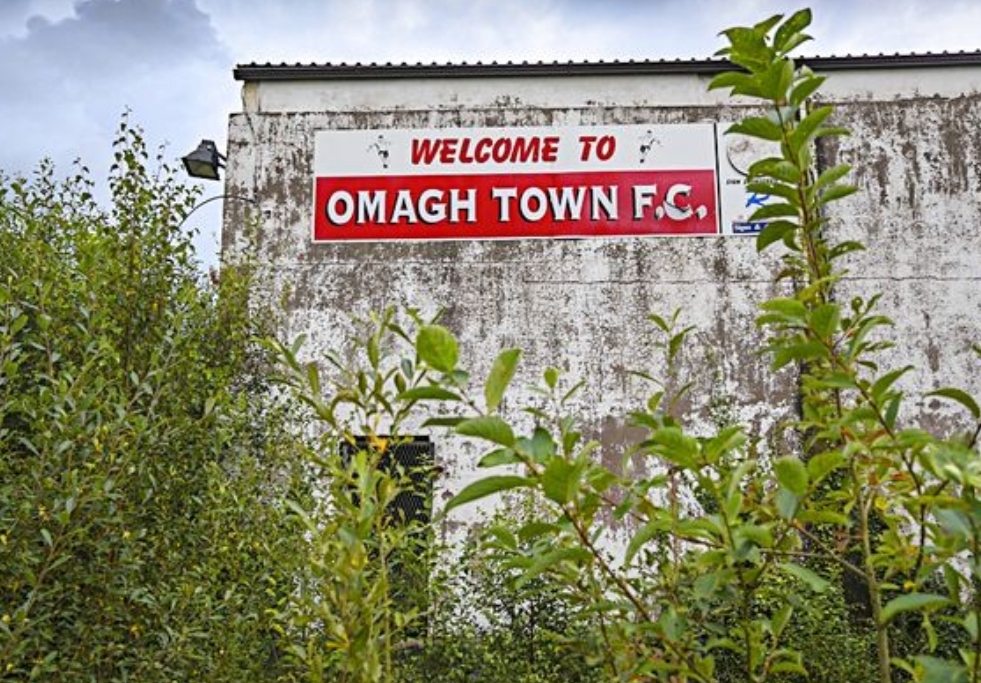
“I don’t know if other clubs lacked the ambition to take it on or if the council held back. But it is a crying shame for youngsters in Omagh.”
It makes you wonder if there was an alternative solution, whether the call to fold was made in too much haste.
Whether, if there was the possibility, just a little more time would have proved of the essence to salvage it.
Alas, those hypotheticals did not play out in reality.
And thus, that is how you have this hole in the heart all this time later.
Featured image from Jay McGagran/stg.wearetyrone.com.
- It’s unfair to put blame at feet of Linfield and Cliftonville for Irish Cup Final crowd disorder
 A penny for the thoughts of Linfield and Cliftonville this week. This year’s Irish Cup Final was a spectacular in every sense. Nearly 15,000 packed inside Windsor Park for the biggest-attended domestic fixture in Northern Ireland this century and an occasion to savour that, for the most part, featured backing from both sides that supported… Read more: It’s unfair to put blame at feet of Linfield and Cliftonville for Irish Cup Final crowd disorder
 - Irish League chiefs must improve provisions in place to attract younger fans and families
 Let’s get a basic fact of life out of the way first – no one likes a price hike. No one likes a price hike in the same way that no one likes paying taxes, bills, debts, insurance and other such necessary expenses which, in themselves, are rising amid a general rise in the cost… Read more: Irish League chiefs must improve provisions in place to attract younger fans and families
 - How the Irish FA’s new ‘Conference Layer’ for intermediate football can be big hit or own goal
 Changes to the intermediate football sphere in Northern Ireland have long been touted and, going by the Irish FA’s latest update on the topic, closer than ever to coming to fruition. From the 2026-27 campaign, a new ‘Conference Layer’ will be in effect as part of a radical shake-up of the intermediate levels of the… Read more: How the Irish FA’s new ‘Conference Layer’ for intermediate football can be big hit or own goal
 - Steven McCullough’s crucial goal in relegation play-off seals him as a Ballymena United great
 There’s been a change in priorities for Ballymena United during recent years – albeit not necessarily the type supporters would’ve perhaps wanted. In 2019, the Braidmen were the second best team in the Irish League. Runners-up behind Linfield that year, and just seven points adrift of top spot, the peak years of David Jeffrey’s tenure… Read more: Steven McCullough’s crucial goal in relegation play-off seals him as a Ballymena United great
 - Ending Cliftonville’s Irish Cup drought proves Jim can fix it… now he must target league glory
 Finally, it’s Cliftonville’s year in the Irish Cup. An agonising waiting game ends at last and a drought that lasted 45 painful years is over in one burst of champagne rain. Since 1979, the Reds have contrived to fail in various ways in their pursuit of that elusive ninth Irish Cup – until a man… Read more: Ending Cliftonville’s Irish Cup drought proves Jim can fix it… now he must target league glory
Make a one-time donation
Make a monthly donation
Make a yearly donation
Choose an amount
Or enter a custom amount
Your contribution is appreciated.
Your contribution is appreciated.
Your contribution is appreciated.
 Football Chatters
Leave a comment